A $915 million ethanol acquisition could reshape the corn market in northwestern Indiana, bringing one of the Midwest’s leading agricultural companies into a strategic position to serve Hoosier farmers. The Andersons, Inc.’s proposed acquisition of Harvestone Low Carbon Partners (HLCP) combines grain merchandising, corn procurement, ethanol production and emerging low-carbon fuel opportunities in a deal with significant implications for Indiana agriculture.
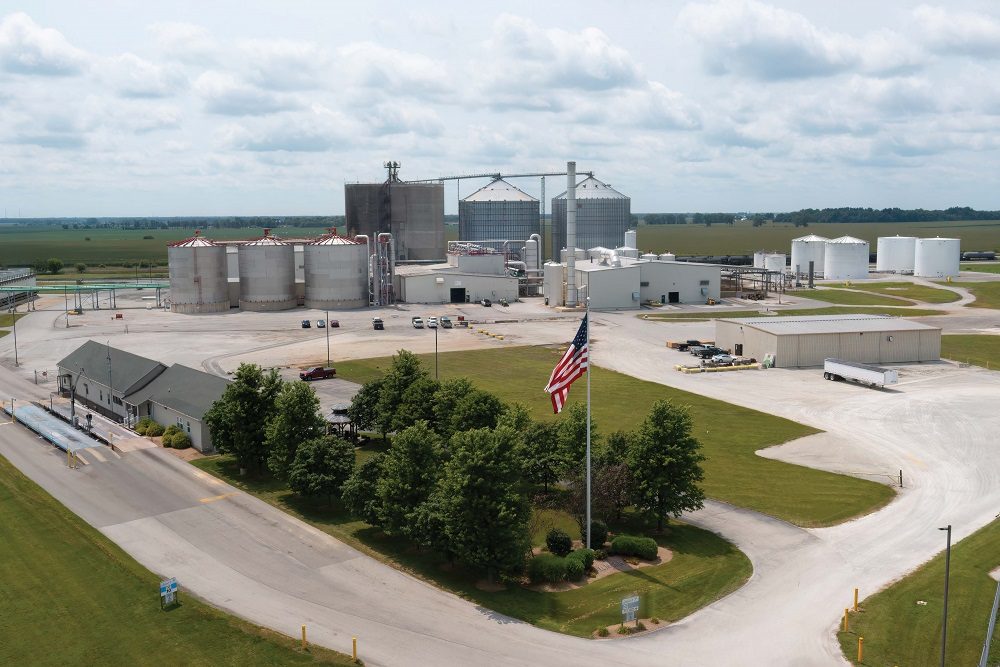
At the center of the transaction is Iroquois Bio-Energy Company in Rensselaer, a Jasper County ethanol plant producing approximately 60 million gallons of ethanol annually while consuming nearly 19 million bushels of Indiana corn. If completed, the acquisition would make Rensselaer The Andersons’ second Indiana ethanol plant, complementing its established Clymers operation near Logansport and expanding its corn-processing presence across the state.
The acquisition comes as Indiana farmers confront tight corn margins, rising production costs and mounting pressure to strengthen domestic grain demand. The Andersons’ extensive grain merchandising and procurement network, combined with HLCP’s low-carbon ethanol capabilities, could create new opportunities for corn producers in northwestern Indiana while positioning the Rensselaer facility to capitalize on the growing market for renewable fuels.
Rensselaer plant could become strategic corn-buying asset
The Rensselaer ethanol facility gives The Andersons a strategically important position in northwestern Indiana, where corn production is a cornerstone of the regional agricultural economy.
The plant, located at 751 West State Road 114, has operated since 2007 and processes approximately 19 million bushels of corn annually. Its 60-million-gallon ethanol production capacity makes it a significant regional corn consumer.
For farmers in Jasper, Newton, Pulaski, White, Benton and surrounding counties, the transaction could strengthen an established local market for corn.
The acquisition does not automatically mean higher corn prices or improved basis. However, ownership by The Andersons could create opportunities to integrate the Rensselaer plant into a larger grain procurement and merchandising network.
The Andersons already operates an ethanol plant and grain elevator at Clymers, near Logansport, giving the company two strategically positioned corn-processing operations in Indiana if the transaction closes.
The company’s established grain merchandising capabilities could potentially improve coordination between corn origination, transportation, ethanol production and co-product marketing.
For farmers, the practical question will be whether the combined operation translates into more competitive corn bids, dependable delivery opportunities and stronger local demand.
The Rensselaer facility also produces valuable co-products, including distillers grains, which are widely used in livestock feed. Those products create additional connections between ethanol production and Indiana’s livestock industry.
Carbon capture could give Indiana corn additional value
One of the most significant aspects of the acquisition is HLCP’s established carbon capture and sequestration infrastructure.
The company has developed vertically integrated carbon capture capabilities designed to reduce the carbon intensity of ethanol production. That distinction could become increasingly important as renewable fuels producers compete for premium markets.
The Andersons estimates that approximately half of the $915 million purchase price is attributable to anticipated cash flows from federal 45Z clean fuel production tax credits and 45Q carbon capture tax credits.
The remaining value is attributed to the underlying ethanol operations and additional low-carbon opportunities.
The acquisition could position The Andersons to capitalize on markets that place a premium on ethanol produced with lower carbon emissions.
For Indiana farmers, that raises an important long-term possibility: corn could become increasingly valuable not only as a source of ethanol, but also as feedstock for fuels that meet increasingly demanding carbon-intensity requirements.
The Andersons says the carbon capture infrastructure at HLCP gives it access to capabilities that remain relatively uncommon among U.S. ethanol producers.
The company also expects to leverage its grain origination, merchandising and logistics operations to improve feedstock procurement and capture additional value from ethanol co-products.
Those opportunities could become increasingly important as the renewable fuels industry evolves and producers look for new ways to improve ethanol margins.
Indiana’s ethanol industry already represents a major corn demand engine
The Rensselaer acquisition comes against the backdrop of an ethanol industry that already plays an enormous role in Indiana agriculture.
According to the Indiana State Department of Agriculture, Indiana has 15 ethanol plants, with nearly half of the state’s corn crop converted into ethanol.
Indiana Government+1
The Renewable Fuels Association’s 2025 Indiana industry profile estimates that the state’s ethanol facilities:
-
Produce approximately 1.4 billion gallons of ethanol annually.
-
Consume approximately 44% of Indiana’s corn crop.
-
Generate approximately 3.7 million tons of distillers grains annually.
-
Support an estimated 24,729 jobs.
-
Generate approximately $2.6 billion in ethanol and distillers grains production value.
For Indiana corn growers, those numbers demonstrate the importance of ethanol plants as a domestic demand source.
Unlike export markets, which can fluctuate with international trade negotiations, tariffs and geopolitical developments, ethanol plants provide a substantial homegrown market for corn.
That does not eliminate market risk. Ethanol profitability remains influenced by corn prices, gasoline demand, ethanol prices, energy costs, federal policy and the economics of renewable fuel incentives.
But the industry’s enormous appetite for corn makes ethanol production an important part of Indiana’s agricultural infrastructure.
Where Indiana’s 15 ethanol plants are located
The following facilities are identified in the Renewable Fuels Association’s 2025 Indiana ethanol industry profile. Production capacities are reported in million gallons per year (MGY).
Indiana ethanol facilities and reported annual capacity:
| Ethanol facility | Location | Capacity |
|---|---|---|
| Cardinal Ethanol | Union City | 135 million |
| Central Indiana Ethanol (CIE) | Marion | 55 million |
| Grain Processing Corp. | Washington | 37 million |
| Green Plains | Mount Vernon | 90 million |
| Harvestone Low Carbon Partners | Rensselaer | 60 million |
| POET Biorefining | Alexandria | 90 million |
| POET Biorefining | Cloverdale | 95 million |
| POET Biorefining | North Manchester | 90 million |
| POET Biorefining | Portland | 90 million |
| POET Biorefining | Shelbyville | 98 million |
| The Andersons Clymers Ethanol | Clymers | 135 million |
| Valero Renewable Fuels | Bluffton | 135 million |
| Valero Renewable Fuels | Linden | 135 million |
| Valero Renewable Fuels | Mount Vernon | 110 million |
| VERBIO North America | South Bend | 90 million |
Important industry context: The RFA’s facility profile lists 15 ethanol facilities. Other Indiana government and industry references contain different facility counts and capacity figures, reflecting differences in reporting dates, facility classifications and plant updates. These figures should be treated as a snapshot rather than a definitive current operating-capacity inventory.
The Rensselaer and Clymers plants are particularly significant for northwestern and north-central Indiana producers because they provide regional corn-processing outlets within the broader Corn Belt.
Indiana’s biodiesel industry provides another outlet for soybean producers
While ethanol dominates Indiana’s corn-based renewable fuels industry, biodiesel provides an important market for the state’s soybean industry.
Indiana’s biodiesel production facility is operated by Louis Dreyfus Company in Claypool, in Kosciusko County.
The Indiana Office of Energy Development lists the plant’s operating capacity at approximately 88 million gallons annually. The U.S. Energy Information Administration’s 2025 capacity report lists Indiana’s biodiesel production capacity at approximately 99 million gallons annually.
The difference reflects differing reporting periods and capacity estimates.
Biodiesel is produced from renewable feedstocks including soybean oil, other vegetable oils, animal fats and recycled cooking oils. For Indiana soybean growers, biodiesel production represents an important source of domestic demand for soybean oil.
Indiana’s agricultural industry is therefore positioned to benefit from two major renewable fuels markets: corn-based ethanol and soybean-based biodiesel.
The Andersons’ acquisition, however, is specifically focused on ethanol production and low-carbon fuels rather than biodiesel manufacturing.
The Andersons: A major agricultural presence across Indiana
The acquisition also deserves attention because of The Andersons’ longstanding relationship with Indiana farmers.
Founded in Maumee, Ohio, in 1947, The Andersons is a diversified North American agricultural and renewable fuels company with operations spanning agribusiness, grain merchandising, plant nutrients, renewable fuels and logistics.
The company’s agricultural business is built around connecting farmers with commodity markets while providing grain handling, merchandising, transportation and agricultural input services.
The Andersons’ existing Indiana footprint
The company currently maintains four Indiana grain facilities:
-
Clymers: Grain elevator and ethanol plant near Logansport in Cass County.
-
Delphi: Grain elevator in Carroll County.
-
Dunkirk: Grain elevator and fertilizer facility in Jay County.
-
Oakville: Grain elevator in Delaware County.
The company’s Indiana operations are particularly important because they connect grain production with processing, storage, transportation and fertilizer distribution.
Clymers: A major corn-processing operation
The Andersons’ Clymers ethanol plant near Logansport is one of the company’s established renewable fuels facilities.
The plant processes corn into ethanol and distillers grains, providing a market for grain producers while supplying feed ingredients for livestock operations.
The Indiana Department of Environmental Management describes the Clymers facility as a continuous operation involving grain receiving and storage, fermentation, ethanol production, distillers grains processing and product shipping.
The Andersons’ existing Clymers operation provides an important foundation for the company’s proposed expansion into northwestern Indiana.
If the Rensselaer acquisition closes, The Andersons would have two ethanol plants in Indiana, expanding its processing presence in the state and strengthening its position across the Eastern Corn Belt.
A $915 million bet on the future of renewable fuels
The Andersons announced Nov. 4 that it had entered into a definitive agreement to acquire HLCP from Energy Capital Partners for $915 million.
The transaction includes three ethanol facilities:
-
Two plants in North Dakota.
-
Iroquois Bio-Energy Company in Rensselaer, Indiana.
The acquisition would increase The Andersons’ annual ethanol production capacity by approximately 215 million gallons, expanding its renewable fuels platform by more than 40%.
Following the transaction, the company expects to operate approximately 730 million gallons of annual ethanol production capacity across seven plants.
The Andersons expects the acquisition to close during the fourth quarter of 2026 or early in the first quarter of 2027, subject to regulatory approvals and customary closing conditions.
The company plans to finance the purchase through approximately $300 million in borrowings under its existing revolving credit facility and $615 million in additional long-term debt.
The Andersons expects the transaction to be immediately accretive to earnings per share and cash flow.
CEO Bill Krueger said HLCP’s established low-carbon capabilities, production economics and strategically positioned facilities make it a strong fit for the company’s renewable fuels strategy.
Jeff Zueger, HLCP’s CEO, said the companies share a commitment to employees, communities and customers.
The acquisition is also expected to create opportunities to integrate the companies’ grain procurement, logistics, ethanol production and co-product marketing operations.
What Indiana farmers should watch next
The proposed acquisition creates several important questions for Indiana corn producers.
Will the Rensselaer plant become a more aggressive corn buyer?
The Andersons’ established grain merchandising network could create opportunities for stronger procurement coordination. Farmers should watch for changes in local cash bids, basis levels, delivery programs and grain acceptance policies.
Will low-carbon ethanol create additional value for Indiana corn?
Carbon capture technology and federal clean fuel incentives could improve the economics of ethanol production. Whether those benefits ultimately translate into improved corn prices will depend on market conditions and how much value reaches grain suppliers.
Could Indiana become a larger player in sustainable aviation fuel?
The acquisition arrives as the renewable fuels industry explores new markets for ethanol, including sustainable aviation fuel. Indiana’s agricultural production, transportation infrastructure and established ethanol industry could make the state an important participant in that developing market.
Will the transaction affect plant employees or local operations?
The acquisition announcement does not specify potential staffing changes at the Rensselaer facility. The Andersons and HLCP have emphasized their commitment to employees and communities, but farmers and local residents will be watching for details as the transaction progresses.
Bottom line for Indiana corn producers
The Andersons’ proposed acquisition of Harvestone Low Carbon Partners represents a significant investment in Indiana agriculture and the future of renewable fuels.
For northwestern Indiana farmers, the Rensselaer plant is the centerpiece of the deal. Its annual consumption of approximately 19 million bushels of corn makes it an important regional buyer, and its integration into The Andersons’ agricultural network could create new opportunities for grain marketing and procurement.
The acquisition will not solve Indiana farmers’ profitability challenges overnight. But it reinforces the importance of ethanol production as a domestic market for corn and underscores the growing connection between agriculture, renewable energy and carbon-reduction technology.
As Indiana producers continue to face pressure from input costs, commodity prices and changing trade dynamics, the future of the ethanol industry could play an increasingly important role in determining the strength of the state’s corn market.
The next chapter will depend on whether this major corporate investment translates into stronger demand, improved market access and meaningful economic benefits for the farmers who supply the corn.