
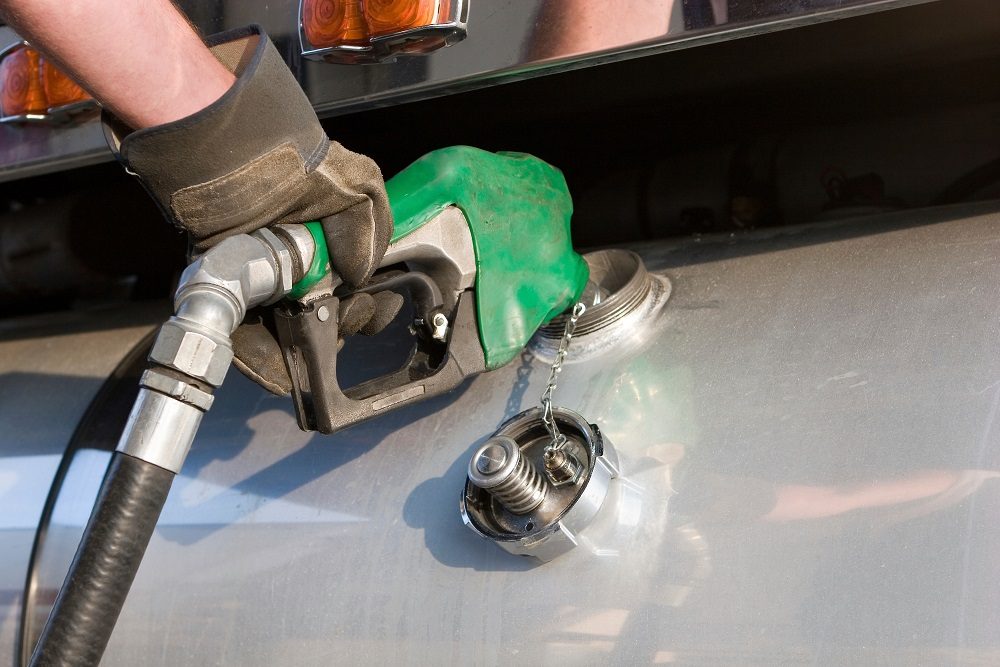
Indiana farmers are getting another month of relief from rising fuel costs as Gov. Mike Braun extends the state’s emergency diesel provisions through Dec. 4, giving Hoosier agricultural producers additional flexibility to move crops and keep harvest operations rolling.
Braun signed executive orders Wednesday, Nov. 4, extending Indiana’s statewide energy emergency and continuing the suspension of restrictions on dyed diesel fuel for qualifying agricultural and timber-harvesting vehicles.
The move comes as President Trump’s administration and several Midwest governors have taken unprecedented steps to temporarily expand the use of red-dyed off-road diesel on public highways — a potential source of savings for farmers hauling grain, livestock and other agricultural products during one of the most fuel-intensive periods of the year.
“Affordability is my top priority, and I’m using every tool available to help Hoosier families and farmers save money at the pump,” Braun said. “We’re keeping these savings for Hoosier families and farmers in place for another month while protecting funding for our roads and infrastructure.”
Indiana Extends Diesel Relief Through Dec. 4
Braun’s latest action continues the suspension of special fuel restrictions for Indiana farmers and timber harvesters, allowing dyed diesel to be used in qualifying highway vehicles engaged in agricultural and timber-harvesting operations.
The relief is particularly timely as Indiana producers continue moving corn and soybeans from fields to grain elevators, storage facilities and processing destinations.
Red-dyed diesel is normally reserved for off-road equipment, including tractors, combines and other machinery used in farming. Because it is intended for exempt uses, the fuel generally is not subject to the same taxes as clear diesel purchased for highway transportation.
Using dyed diesel in a vehicle traveling on public roads ordinarily triggers restrictions, tax obligations and potential penalties.
Indiana’s emergency order temporarily eases those restrictions for eligible agricultural and timber operations, helping producers reduce transportation expenses during harvest.
The state’s fiscal impact is expected to remain relatively limited compared with the broader gasoline tax suspension. Braun previously estimated the cost of Indiana’s off-road diesel relief at approximately $1 million to $3 million per month.
The governor also extended Indiana’s gasoline excise and gasoline usage tax suspensions through Dec. 4. Those gasoline taxes represent a combined 64 cents per gallon in savings during November.
Braun said the state will use existing reserves to protect local government funding and allow Indiana Department of Transportation projects and maintenance to continue without interruption.
The latest extension is expected to be Indiana’s final fuel tax suspension under the current emergency declaration. Continuing the relief beyond Dec. 4 would require Braun to declare another emergency, something he has previously indicated may be unlikely ahead of the next legislative session.
Trump’s Diesel Executive Order Opens Door to Broader Relief
Indiana’s action follows President Trump’s Oct. 5 executive order, titled Emergency Tax Relief on Diesel Fuel, which temporarily expands federal relief for dyed diesel used on highways.
The order directs federal agencies to defer certain diesel fuel excise tax obligations and provide penalty relief for qualifying highway use of dyed diesel through the end of 2026.
The Internal Revenue Service subsequently announced it would not impose penalties when dyed diesel is sold for highway use or used in highway vehicles nationwide during the relief period.
The federal penalty relief is retroactive to Oct. 1 and runs through Dec. 31, 2026.
The IRS also suspended ordinary federal collection and enforcement procedures for the period, including inspections of on-road dyed-diesel usage.
However, the federal action does not automatically eliminate every diesel tax obligation.
The executive order directs the Treasury Department to defer certain federal excise tax payments without interest or penalties, while exploring ways to eliminate the deferred tax liability altogether.
That distinction matters for farmers and agricultural businesses: penalty relief and tax deferral do not necessarily mean the underlying tax has been permanently forgiven.
The federal order also does not automatically override state fuel restrictions or state-level penalties.
That has prompted governors across the Midwest to take additional action to align their states’ rules with the federal relief.
Michigan, Ohio, Kentucky and Illinois Join the Effort
Indiana is not alone in trying to reduce the cost of moving agricultural products during harvest.
Several neighboring states have adopted their own dyed-diesel relief measures, although the scope and eligibility requirements vary.
Michigan: Gov. Gretchen Whitmer signed an executive order Oct. 12 temporarily allowing eligible farmers and loggers to use dyed diesel in highway-licensed vehicles through Dec. 31.
The order waives Michigan’s 52-cent-per-gallon state diesel tax without interest or penalties for qualifying agricultural and logging vehicles.
The relief does not extend to commercial-use, for-hire plated vehicles.
Michigan Farm Bureau President Ben LaCross welcomed the action, saying farmers and loggers are facing high diesel prices, tight margins and significant market volatility.
“With diesel prices remaining high, every bit of savings helps Michigan’s farmers and loggers as they work to get the harvest in and keep agricultural products moving,” LaCross said.
Ohio: Gov. Mike DeWine signed Executive Order 2026-05D on Oct. 21, aligning Ohio’s enforcement practices with federal dyed-diesel relief.
The Ohio Department of Taxation announced that the state would not impose applicable penalties during the federal relief period for selling, distributing or using dyed diesel on public highways or waterways.
The action is intended to support Ohio’s agricultural and transportation industries through the end of the federal relief period, Dec. 31.
Kentucky: Gov. Andy Beshear declared a state of emergency Oct. 7, allowing Kentucky farmers and truckers to use untaxed or dyed diesel on public roadways beginning Oct. 8.
The order suspends specified restrictions and related state penalties associated with highway use of dyed diesel.
Kentucky’s relief is tied to the emergency and federal order, ending when the war in Iran concludes or the federal executive order expires Dec. 31, whichever comes first.
Illinois: Gov. JB Pritzker signed Executive Order 2026-08 on Oct. 6, directing the Illinois Department of Revenue and Illinois State Police not to impose penalties for qualifying agricultural highway use of dyed diesel through Dec. 31.
Illinois’ relief applies to farming and agricultural purposes, including qualifying transportation of agricultural goods.
The state has also issued guidance requiring agricultural users to maintain documentation demonstrating eligibility for the relief.
That requirement is an important reminder for Indiana farmers and agricultural businesses operating across state lines: fuel-use rules and recordkeeping requirements may differ by jurisdiction.
Relief Could Help Farmers Haul Their Own Crops
The potential savings from dyed-diesel relief are most significant for farmers who already maintain off-road diesel supplies and can use that fuel in qualifying highway vehicles.
Farmers hauling their own grain, livestock or agricultural products may be able to reduce fuel expenses by using existing dyed-diesel supplies instead of purchasing additional clear diesel for transportation.
The American Farm Bureau Federation has emphasized that even modest per-gallon savings can add up quickly for operations running multiple trucks or hauling agricultural products over long distances.
The White House has estimated the federal initiative could deliver approximately $640 million in combined federal and state savings across roughly 224.6 million harvested acres.
But the actual savings for individual farmers will depend on fuel consumption, qualifying vehicle use, state rules and whether the producer can access existing dyed-diesel supplies.
The relief also comes with practical limitations.
Not every highway vehicle automatically qualifies for state-level relief, and farmers must continue following vehicle specifications and manufacturer fuel requirements.
Agricultural businesses transporting goods across state lines should also be especially careful. A state’s permission to use dyed diesel does not necessarily apply once a vehicle crosses into another jurisdiction.
Fuel Relief Offers Breathing Room — Not a Long-Term Fix
For Indiana farmers facing narrow margins, high operating costs and uncertainty about commodity prices, every opportunity to lower harvest expenses matters.
Braun’s latest extension gives producers another month of flexibility while the federal government and neighboring states continue working through their own fuel-relief policies.
But the broader diesel-price challenge remains.
Temporary tax and penalty relief can help reduce costs for eligible operations, but it does not necessarily address the underlying supply disruptions and market pressures driving diesel prices higher.
For now, Indiana farmers have another month to take advantage of the state’s emergency provisions — and a growing number of Midwest states are making similar moves to keep agricultural products moving from the farm to market.