
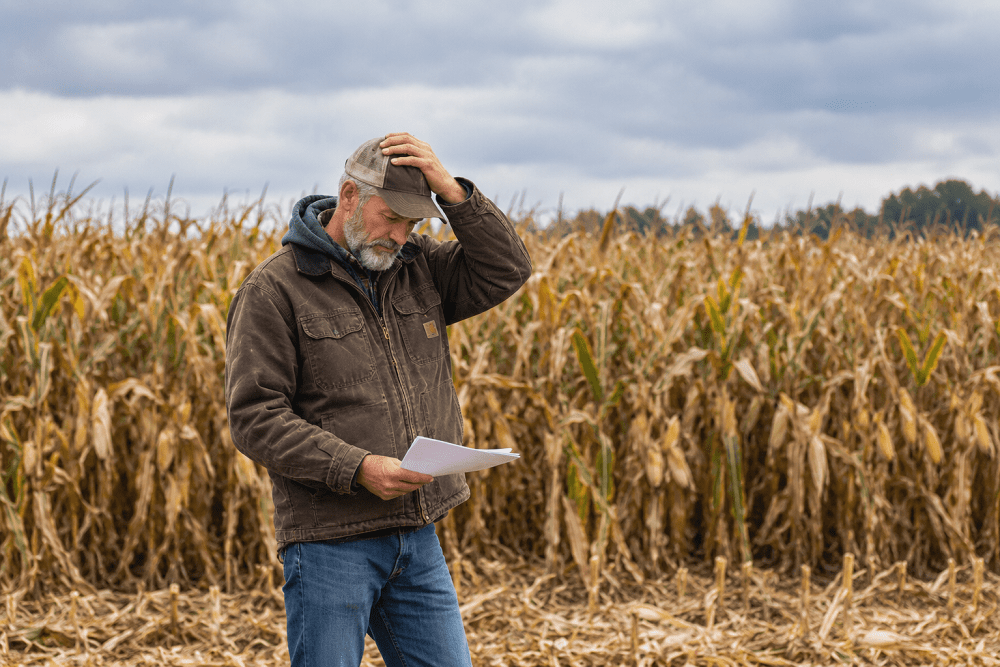
American farmers could face mounting pressure on fertilizer availability and affordability as geopolitical conflict in the Middle East and trade uncertainty with Canada threaten supplies of three essential crop nutrients: nitrogen, phosphate and potash.
The risks extend well beyond shipping disruptions. Reduced exports, higher production costs and uncertainty over future trade policy are putting pressure on the global fertilizer market at a time when farmers are already watching input costs closely and trying to protect increasingly tight crop margins.
Josh Linville, vice president of fertilizer for StoneX, says the Strait of Hormuz remains a critical choke point for global fertilizer supplies. The waterway connects the Persian Gulf to international shipping routes and serves as a major export corridor for several of the world’s leading fertilizer-producing countries.
“Three of the world’s biggest urea exporters—Iran, Qatar, Saudi Arabia—are behind the Strait of Hormuz,” Linville said. “The same three are big anhydrous exporters.”
Saudi Arabia is also a major phosphate exporter, compounding the potential impact of disruptions in the region.
“With the attacks that went on this weekend, it doesn’t look like it’s improving anytime soon,” Linville said.
For farmers, the concern is not simply whether fertilizer shipments can reach global markets. Disruptions can also affect the cost of manufacturing fertilizer, tightening supplies even in countries that produce their own.
Nitrogen supplies face mounting pressure
Natural gas is a major feedstock for nitrogen fertilizer production. When energy supplies are disrupted or gas prices rise, fertilizer manufacturers can face higher operating costs, and some plants may reduce production or shut down if operating becomes uneconomical.
Linville said the impact of the Strait of Hormuz disruption extends into global energy markets, affecting the economics of nitrogen production well beyond the Middle East.
“That gas goes to feed nitrogen production facilities around the world,” he said, explaining how disruptions to energy supplies can influence production decisions. “That’s why we’ve seen a little bit of European production go down.”
That creates a potential ripple effect throughout the fertilizer supply chain. Lost exports from major producing countries, combined with reduced production elsewhere, can leave buyers competing for a smaller pool of available product.
For U.S. farmers preparing for upcoming fertilizer applications, that combination raises concerns about both supply and price.
Sulfur shortages threaten phosphate production
The pressure on phosphate fertilizer may be even more complicated.
Sulfur is an important raw material in phosphate fertilizer manufacturing, and Linville said the Strait of Hormuz accounts for about half of the world’s tradable sulfur supply.
Losing access to that material can constrain phosphate production, including at manufacturing facilities outside the Middle East.
“The Strait of Hormuz has about half the world’s tradable supply coming from that body of water,” Linville said. “Without that supply, other manufacturers like ours here in the U.S., production rates suffer because there’s just not enough of it, and/or the price is so high it doesn’t make financial sense.”
That creates a difficult dynamic for farmers trying to understand fertilizer prices.
Ordinarily, weaker demand would be expected to put downward pressure on prices. But when manufacturers face elevated costs for essential raw materials, prices may remain stubbornly high even when buyers pull back.
Linville said that dynamic has been particularly frustrating in the phosphate market.
If phosphate prices decline too far to cover the cost of production, manufacturers may cut output, potentially tightening supplies further.
“More production shuts down because that price floor is so stinking high,” Linville said.
The result is a market in which weaker demand does not necessarily translate into the price relief farmers might expect. High production costs can limit how far prices fall while also discouraging manufacturers from producing more fertilizer.
For growers, that means continued uncertainty as they weigh fertilizer purchases against crop prices, cash flow and expected returns.
Canada trade tensions put potash in the spotlight
While the Middle East threatens nitrogen and phosphate supplies, U.S.-Canada trade relations represent another potential vulnerability for American agriculture.
The United States depends heavily on imported potash, a key source of potassium used to support crop development, water regulation and overall plant health. Canada is by far the most important foreign supplier to the U.S. market.
Linville said roughly 90% of U.S. potash imports come from Canada, making negotiations over the United States-Mexico-Canada Agreement (USMCA) particularly important to fertilizer buyers on both sides of the border.
“When you look at our overall demand, we don’t produce very much of it,” Linville said of U.S. potash production. “There’s a heavy reliance on imports.”
So far, the trade rhetoric has not translated into direct action against potash, Linville said. But he warned that a breakdown in negotiations could change that.
“Fortunately, for all the bluster on both sides of the aisle, both sides of the border, we’ve never seen anything actually go against potash yet,” he said.
That relative stability may not be guaranteed if the two countries fail to reach common ground.
“If this trade agreement continues to fall apart, we can’t find common ground, and we can’t get something put in place, I think both sides of the border go after potash,” Linville said.
Such a move could disrupt an important supply relationship for both countries. Canada relies on the U.S. market for a major outlet for its potash, while American farmers depend on Canadian production to meet domestic fertilizer needs.
Linville said both sides understand how important that relationship is to the movement of potash across the border.
Farmers face a convergence of risks
The fertilizer market now faces several overlapping pressures: geopolitical conflict threatening export routes, shortages of raw materials constraining manufacturing, energy costs affecting nitrogen production and trade uncertainty putting a major potash supply relationship under scrutiny.
Each challenge presents a different risk, but together they could make fertilizer purchasing more difficult for farmers trying to manage input costs and protect margins.
The stakes extend beyond the price paid per ton. Fertilizer is a foundational input for corn, soybeans and other major crops, and decisions about application rates and nutrient availability can have consequences for yield potential and profitability.
For producers planning ahead, the key questions are whether supplies will remain accessible, how much fertilizer will cost when purchases are made, and whether global manufacturers can maintain production amid ongoing disruptions.
Linville’s assessment underscores the importance of watching developments in both international shipping and North American trade negotiations. A resolution to one challenge would not necessarily eliminate the others.
For now, fertilizer availability and affordability remain concerns for farmers navigating an already uncertain economic environment. With global supplies exposed to conflict, production costs and trade policy, the path to dependable, competitively priced fertilizer may depend on developments far beyond the farm gate.