
Across the Midwest, the mere mention of artificial intelligence in agriculture tends to spark two immediate reactions: worry over losing the human touch and fear over who gets access to sensitive farm data.
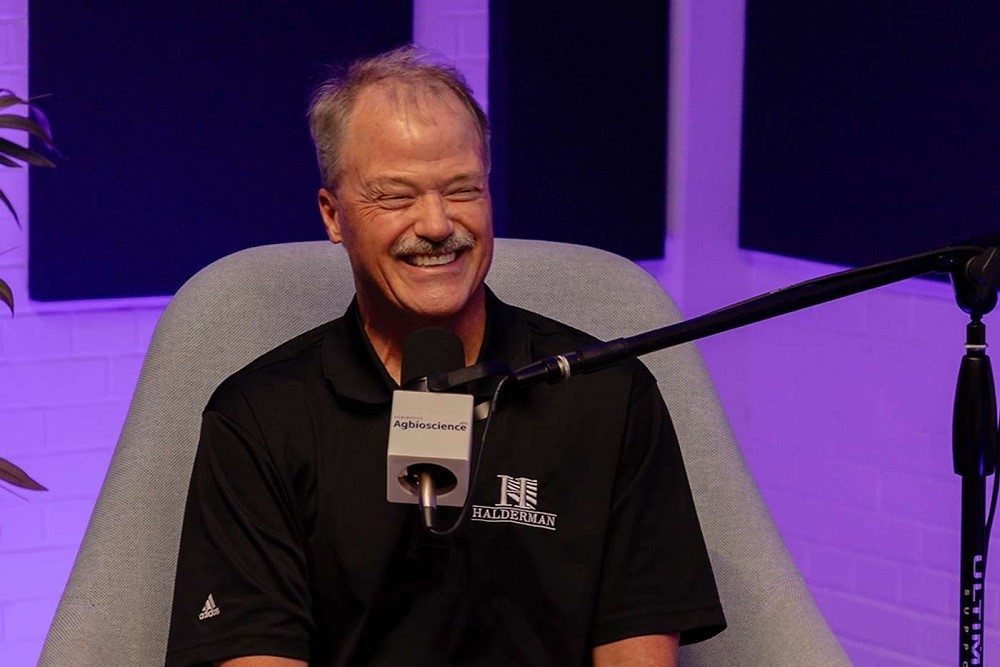
At Halderman Real Estate & Farm Management, based in Wabash, Indiana, President Howard Halderman is working to rewrite that narrative. Rather than treating AI as a replacement for boots-on-the-ground expertise, his team is using custom digital tools to strip away tedious administrative bottlenecks—all while keeping proprietary land data strictly under lock and key.
“What we do is a relationship business, and the relationships are going to be the most critical,” Halderman explains. “I’m turning control over to a machine, and you’re really not. At the end of the day, you still control it, you still make the final decisions.”
Gaining Ground on Speed and Efficiency
For Halderman, adoption began roughly 18 months ago. His team quickly realized that while machines can’t build trust with a landowner, they excel at collecting public data—like tax cards, topography maps, zoning rules, and flood plain information.
On the appraisal side of the business, where appraisers must conform to strict federal standards (USPAP), compiling background data used to take days or weeks of manual research and travel to county courthouses.
“I believe on the appraisal side, we can probably get 65 to 75% of a USPAP-compliant appraisal done, legally done, by the time the appraiser actually sits down to start the project,” Halderman notes. In one instance, an appraiser processed 120 comparable sales in two hours using an AI tool—a task that previously would have taken a week or two.
That gain in speed translates directly to live farmland auctions, where maintaining momentum is critical.
During a multi-tract sale involving 1,300 acres and 16 individual tracts in Southwest Ohio, Halderman’s team put a newly developed AI program to the test. Rather than making bidders wait three to five minutes while operators manually re-calculated complex combination bids on Excel spreadsheets, the AI calculated the highest combination packages in two seconds.
“Our computer operator, Riley, entered that in and it took her 10, 15 seconds. Two seconds later, we had the best combination in Combo A,” Halderman says. “We sold 1,300 acres, 16 tracts in two hours, where we had done 900 acres and 13 tracts in three hours six months prior.”
Safeguarding the “Halderman Desk”
Despite the obvious efficiency gains, Halderman acknowledges that farmers are rightly protective of their operational data. Yield maps, soil fertility tests, financial history, and private lease terms are confidential business assets. If an employee feeds private records into a public AI tool, that information can inadvertently end up training open models across the web.
To eliminate that risk, Halderman partnered with Wabash-based Margin AI to build an internal platform called “Halderman Desk”.
“It is on your computer, on your laptop… It is a locked-down AI, only internal for us,” Halderman emphasizes. “All of that communication, all the interactions that we may have… all of that has to be locked down and that privacy has to be maintained.”
Under this setup, internal communications, client interactions, and farm records remain walled off. Even within the company, individual user portals are partitioned so specific client details aren’t visible across departments.
Enhancing the Human Element
As data analytics and automated reporting become more prevalent, Halderman sees AI as an asset management tool rather than a replacement for practical farming wisdom. By taking over repetitive tasks, the technology frees up farm managers to spend more time listening to landowners, exploring sustainable production practices, and customizing lease structures.
“The farm manager should in five years have a lot more time for the relationship side,” Halderman says. “The farm manager should have for a landowner more opportunities on that farm than they’ve ever had.”
Ultimately, technology is just another tool in the toolbox—one that works best when guided by experienced human judgment.
“You’ve got to be willing to at least work with change,” Halderman reflects. “I’m not saying you’ve got to like it always. But you have to be willing to work with it, because that’s where the opportunities are going to be, and that’s going to enable you to pass that farm on to the next generation.”