
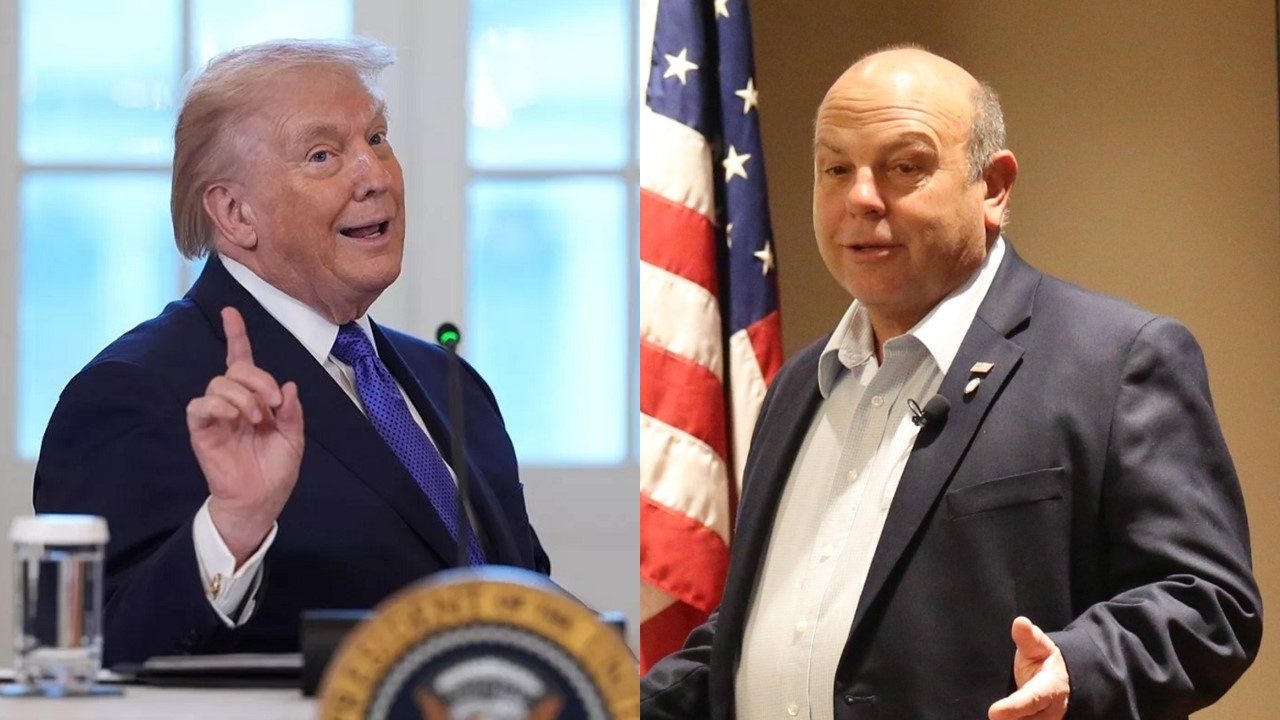
President Trump is moving to put more beef on American grocery shelves — but cattle producers warn the move could pull the rug out from under an industry only beginning to rebuild its historically small herd.
Trump signed a proclamation Wednesday, Aug. 26, temporarily expanding the amount of lean beef trimmings that can enter the United States at the lower, in-quota tariff rate. The action will allow as much as 300,000 metric tons — more than 660 million pounds — of additional beef imports over 90 days, beginning Sept. 1.
The White House says the move is designed to provide immediate relief to consumers facing record-high beef prices while protecting U.S. ranchers and giving them room to rebuild the domestic cattle herd.
But the American Farm Bureau Federation says the timing could be devastating.
“With one of the few bright spots for U.S. agriculture right now — the cattle sector — just became dimmer because of today’s presidential proclamation,” American Farm Bureau President Zippy Duvall said. “The timing of this proclamation is a gut punch to ranchers’ bottom line.”
The clash highlights a difficult reality confronting the beef industry: Americans want more affordable beef today, while ranchers need stronger cattle prices and market confidence to produce more beef tomorrow.
A 90-day window with major implications
Under the proclamation, the expanded import allowance will last for 90 days and permit up to 100,000 tons of lean beef trimmings per month.
The imported product is specifically intended to be blended with U.S. beef to produce ground beef. The administration also is encouraging imported beef to be sold at a discount of 25% below the prevailing import price.
The White House says the action will increase available beef supplies by roughly 10% over current projections and primarily compete with cull cow markets rather than significantly affecting the fed cattle market.
The administration argues the temporary measure is necessary because U.S. beef production is projected to fall roughly 4% from 2025 levels.
The proclamation points to several factors squeezing domestic beef supplies, including drought, reduced feed and forage availability, wildfire conditions and restrictions on live cattle imports from Mexico imposed to protect the U.S. herd from New World screwworm.
The closure of southern ports to Mexican cattle, the administration says, resulted in the loss of hundreds of thousands of metric tons of beef that otherwise could have been produced in the United States.
The White House also says the action does not alter existing commitments involving countries with free trade agreements with the United States or countries already subject to country-specific beef quotas.
Ranchers are finally rebuilding
That temporary increase in beef supplies comes as the U.S. cattle industry is showing some of its first signs of herd rebuilding in years.
USDA data show the nation’s beef cow inventory stood at 28.5 million head on July 1, the lowest level since the current cattle inventory series began in 1971.
The calf crop also remains historically low at about 32.5 million head.
But there is an important signal moving in the opposite direction: beef heifers kept for replacement increased 3% from a year earlier.
That indicates ranchers are beginning to retain more heifers rather than sell them, a critical first step toward rebuilding the nation’s cow herd.
The problem, Farm Bureau says, is that the economics supporting that rebuilding effort are fragile.
Cash cattle prices have fallen approximately 14%, or nearly $40 per hundredweight, in recent months, even as wholesale beef values remain near historic highs.
And the timing of Trump’s import plan could make the situation even more difficult.
Approximately 70% of spring-born calves are typically sold from September through November — almost exactly the same period covered by the administration’s 90-day import window.
That means the additional imported beef could enter the market just as ranchers are making decisions about whether to retain heifers, expand their herds and invest in additional production.
For a rancher, those decisions are measured in years, not weeks.
The economics behind the shrinking herd
The nation’s cattle shortage did not develop overnight.
Drought has forced ranchers across major cattle-producing regions to liquidate herds or place cattle into feedlots because of inadequate forage.
At the same time, the cost of keeping a cow has climbed sharply.
USDA Economic Research Service data show cow-calf production costs reached a record $1,762 per head in 2025. That represents an increase of more than $400 per head — nearly 30% — since 2020.
Those costs include virtually every major expense facing cow-calf operators, from feed and pasture to machinery, labor and other production inputs.
Despite strong cattle prices in recent years, Farm Bureau notes that cow-calf operations have generated negative returns above total production costs for 30 consecutive years when fixed costs such as land, taxes and machinery are included.
Recent years have finally provided ranchers with enough returns above variable costs to make investments in equipment, facilities, fencing and other improvements.
Now, producers face a new question: Will cattle prices remain strong enough to justify rebuilding?
Beef prices tell only part of the story
For consumers, the pressure is unmistakable.
Ground beef reached a record average retail price of $6.90 per pound in April 2026, according to Bureau of Labor Statistics data, and prices have remained near that level.
The United States is the world’s largest consumer of beef by volume and ranks second globally in per-capita beef consumption.
That enormous demand, combined with a historically small domestic herd, has created a supply-and-demand squeeze.
The administration says bringing in additional lean beef trimmings will provide immediate relief while American ranchers rebuild.
Farm Bureau argues that approach risks attacking the symptom while making the underlying problem worse.
“Bringing down the price of cattle will not bring the price of beef down for American families,” Duvall said in a letter to Trump. “Instead, it will discourage American farmers and ranchers from making long-term investments in herd rebuilding.”
Duvall urged the president to reconsider the policy, arguing that the 300,000 metric tons of imports could undermine confidence in the cattle market at precisely the wrong time.
A rancher deciding to expand a cow herd today may wait two years or more before seeing a return on that investment, he said.
A policy collision: cheaper beef now or more cattle later?
That creates the central tension surrounding the administration’s decision.
Consumers are facing record beef prices and want relief at the grocery store.
Ranchers are facing record production costs and need profitable, stable markets to justify rebuilding a cow herd that has fallen to its lowest level in more than five decades.
Farm Bureau contends that importing more beef during the fall calf-selling season could push cattle prices lower, weakening the financial incentive for ranchers to retain heifers.
That could ultimately prolong the very supply shortage the administration is trying to address.
“The cattle industry is finally seeing some of the returns needed to justify reinvesting in their herds,” Farm Bureau said in its analysis. “A surge of imports coinciding with the fall calf-selling season and the drop in cattle prices that would come with those imports would jeopardize that.”
The White House sees the temporary imports differently, arguing the additional supply is narrowly targeted, limited to 90 days and designed primarily to supplement domestic beef for ground beef production.
The administration also says the action will not replace the full volume of beef that would have been available without restrictions on Mexican cattle imposed to slow the spread of New World screwworm.
The stakes extend beyond the grocery store
For American ranchers, the debate is about more than the price of a pound of hamburger.
It is about whether the cattle industry can finally break out of a decades-long cycle of shrinking inventories, high production costs and volatile markets.
Duvall warned that ranchers need confidence in both domestic and international demand before committing the capital required to rebuild.
“A strong domestic food supply is easy to take for granted … until it’s gone,” Duvall said.
The administration’s 90-day strategy is intended to bridge a short-term supply gap.
But for cattle producers, the concern is what happens when those 90 days end — and whether the market signals sent during those three months encourage ranchers to keep rebuilding or convince them to stop.
The answer could determine how quickly America’s cattle herd recovers — and how long consumers will continue paying historically high prices for beef.
“It’s not too late to reverse this decision, and we urge the president to consider the economic harm this causes America’s ranchers,” said Duvall.