
Farmers and ag equipment dealers across the Midwest are standing on edge as a rapidly escalating trade dispute between the United States and Canada threatens to disrupt cross-border supply chains. Following President Trump’s implementation of a 50% U.S. tariff on roughly $20 billion worth of Canadian goods, Canadian Prime Minister Mark Carney announced dollar-for-dollar retaliatory tariffs scheduled to hit right after Labor Day on September 8th. The retaliatory measures explicitly target key agricultural sectors, including dairy, steel, and agricultural equipment.
For major agricultural hubs like Indiana and Michigan, the brewing trade conflict hits dangerously close to home.
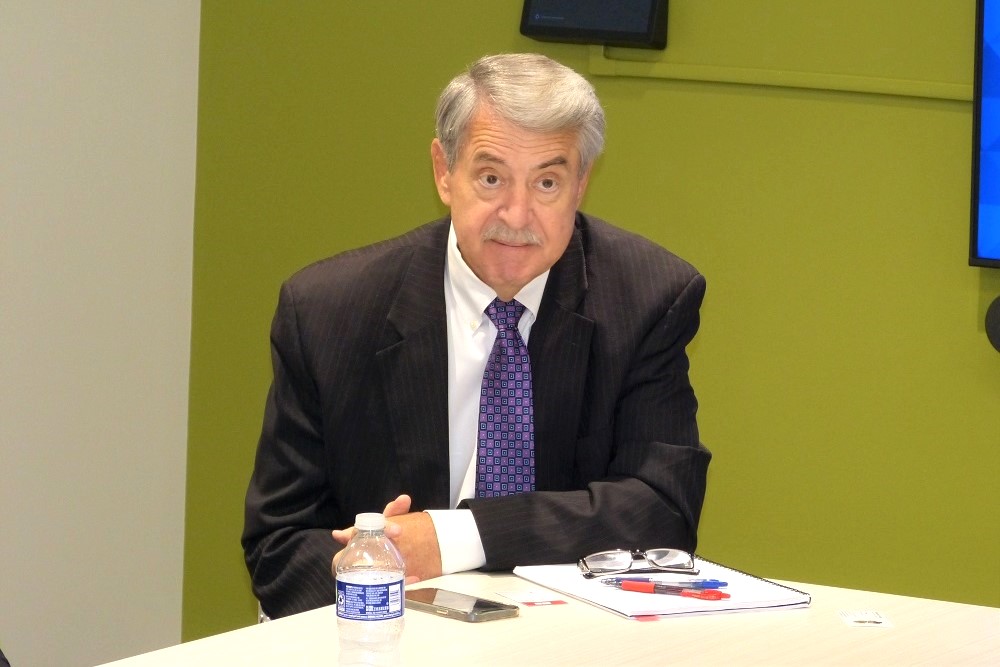
Ted McKinney, CEO of the National Association of State Departments of Agriculture (NASDA) and former USDA Under Secretary of Agriculture for Trade and Foreign Agricultural Affairs, warns that producers should not panic just yet, but acknowledges the high stakes of the standoff.
“My best hope is that this just does not come to fruition because it hurts both sides,” McKinney says. “I hope everybody takes a very big, deep breath, maybe even two or three, and realize that we’ve got to put past transgressions and frustrations behind us.”
Narrow Miss at the Negotiating Table
McKinney stresses that cooler heads must prevail before structural damage is done to the broader supply chain. According to insider discussions, both nations were agonizingly close to a comprehensive agreement before negotiations imploded over non-agricultural disputes, automotive content rules, and last-minute demands.
“The counter-tariffs that Canada is to impose on us are effective September 8th,” McKinney notes. “That delay, I hope, my god, I hope, would give both sides time to settle down, stop this exchange—the nasty exchange, the war exchange—and come to a resolution because I think we were very, repeat, very, very close last Friday.”
Despite heated rhetoric from Trump—including a declaration that he had posted on August 24 on his Truth Social platform saying, “WE DON’T NEED CANADA, THEY NEED US!”—McKinney remains optimistic that ongoing diplomatic channels can pull both countries back from the brink. He points to the upcoming 35th Tri-National Agricultural Accord, scheduled for September 28 through October 1 in Calgary, where state departments of agriculture, Mexican secretariats, and Canadian ag ministers will meet face-to-face.
“Many people don’t know, but for forty-three or four years, there has been an annual meeting of the secretaries of agriculture from Mexico, commissioners, directors and secretaries in the U.S., and the ministers of ag in Canada, and we’re all meeting in Calgary in mid-October,” McKinney explains. “So no doubt some of this will be in discussion.”
Looking Ahead
As the September 8 retaliatory deadline approaches, agricultural groups and state leaders are urging lawmakers in both Washington and Ottawa to step back, look at the bigger picture, and restore civility to the world’s most successful trading partnership. Whether diplomatic engagement can avert long-term structural damage to Midwest equipment dealers and cross-border supply chains will depend heavily on whether leaders choose negotiation over escalation in the days ahead.
CLICK BELOW for Hoosier Ag Today’s radio news report:


