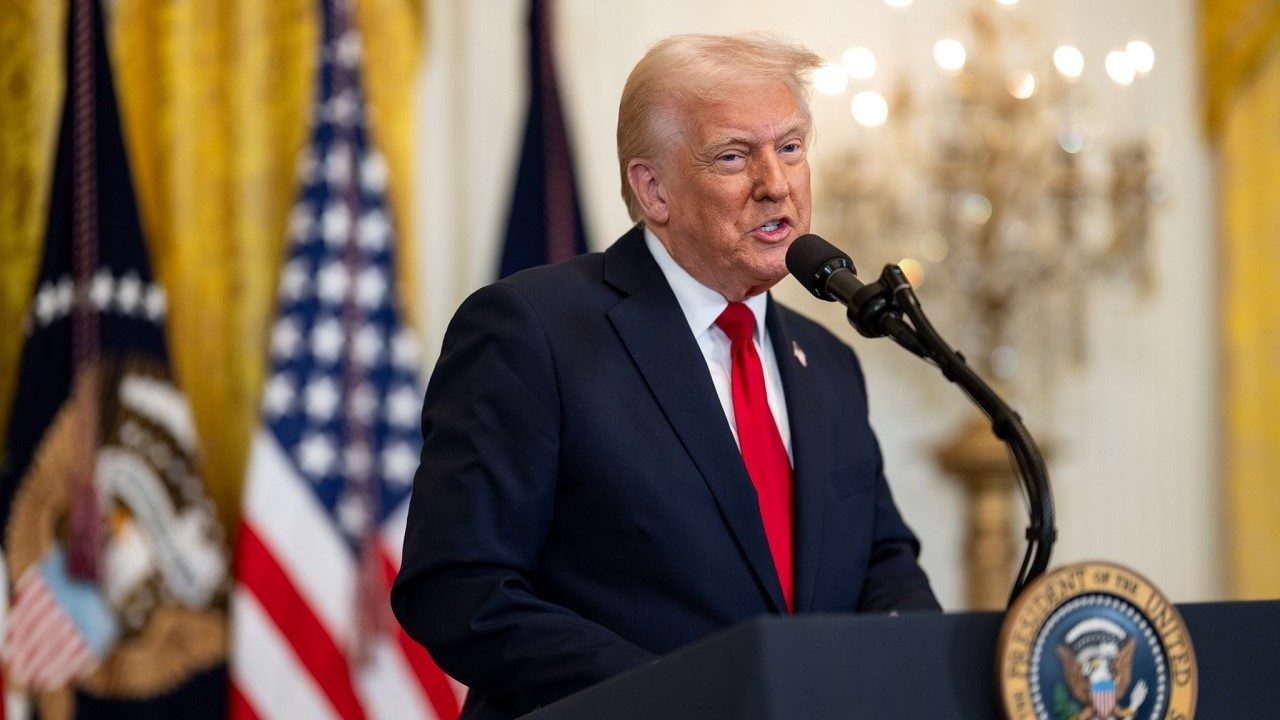
President Donald Trump is using an $87.6 billion emergency spending request tied to the U.S. conflict with Iran to advance two long-sought priorities of rural America: billions of dollars in direct assistance for struggling farmers and permanent nationwide access to higher-ethanol gasoline blends.
The proposal, sent Wednesday to Congress by White House Office of Management and Budget Director Russell Vought, combines funding for military operations and national security programs with more than $11 billion in agricultural assistance and a legislative push to allow year-round sales of E15 fuel, a blend containing 15 percent ethanol.
The move places agriculture at the center of a politically charged supplemental spending package that could face resistance from both Democrats opposed to additional war funding and lawmakers wary of attaching unrelated domestic priorities to emergency legislation.
Still, the inclusion of farm aid and ethanol policy represents one of the most significant agriculture initiatives of Trump’s second term and reflects mounting concerns about the financial health of rural America.
The administration is seeking $10 billion in temporary economic assistance for row-crop and specialty-crop producers, along with more than $1 billion to help farmers recover from severe storm damage in Florida. The aid comes as producers continue to grapple with several years of depressed commodity prices, rising production costs and shrinking profit margins.
“Farmers are grateful to have the president’s backing at such a critical time after enduring years of economic losses due to inflation and depressed markets,” American Farm Bureau Federation President Zippy Duvall said in a statement. He urged Congress to approve the assistance quickly, while noting that farm losses nationwide exceed the amount requested by the administration.
The aid request arrives amid growing concern over the economic pressures facing agriculture. Farm groups have warned that low commodity prices and elevated input costs have squeezed producers, while consolidation and farm closures continue across the countryside.
According to Farm Bureau, nearly 200,000 farms have disappeared nationwide over the past decade.
But the administration’s proposal extends beyond direct payments. Trump is also asking Congress to permanently authorize year-round sales of E15 gasoline, a measure sought for years by corn growers, ethanol producers and biofuel advocates.
The White House described the change as an “urgent and needed fix” in the supplemental legislation.
Federal regulations currently permit year-round sales of E10 gasoline, which contains 10 percent ethanol. Sales of E15 are generally restricted during summer months because of concerns about fuel volatility and air quality, although administrations of both parties have periodically issued temporary waivers allowing summer sales.
Congress has repeatedly considered legislation to remove the restriction permanently. Earlier this year, the House passed the Nationwide Consumer and Fuel Retailer Choice Act, which would allow year-round E15 sales nationwide. A companion bill has been introduced in the Senate, where supporters have struggled to overcome opposition from refining interests and the chamber’s 60-vote threshold for most legislation.
By incorporating the measure into a must-pass supplemental spending package, the White House may be attempting to give the proposal its strongest legislative vehicle yet.
The ethanol industry and major farm organizations quickly praised the move.
Supporters argue that expanding E15 availability would increase demand for corn, strengthen domestic energy production and provide consumers with a lower-cost fuel option. The administration has also framed the measure as part of a broader effort to reduce gasoline prices, which rose following the outbreak of hostilities between the United States, Israel and Iran earlier this year.
Refining companies and some petroleum industry groups have long opposed permanent E15 expansion, arguing that it could complicate fuel distribution systems and impose additional compliance costs.
The agricultural provisions are only a small portion of the broader spending package. The White House is also seeking $21 billion for the Defense Department, $1.4 billion for Ebola response efforts and hundreds of millions of dollars for energy security programs.
The request now heads to Congress, where lawmakers must decide whether to approve the administration’s funding proposal and whether the farm aid and ethanol provisions can survive what is likely to be a contentious debate over war spending.
For rural lawmakers and farm groups, however, the proposal represents a rare opportunity to secure both immediate financial relief and a policy change that could permanently expand demand for U.S. corn.
Whether Congress embraces that combination may depend less on agriculture than on the politics surrounding the broader conflict that gave rise to the spending request in the first place.