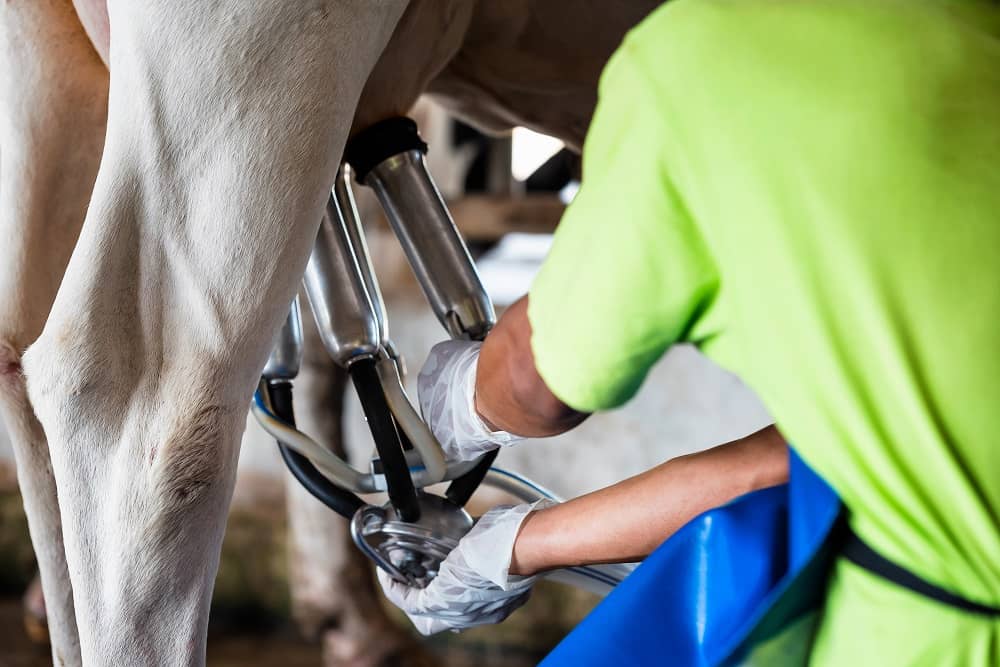
The Trump administration on Wednesday clarified that dairy operations may qualify to hire foreign workers through the federal H-2A visa program under certain circumstances, a move welcomed by agricultural groups that have long argued labor shortages threaten the stability of the nation’s dairy industry.
The guidance, issued jointly by the U.S. Departments of Homeland Security and Labor and supported by the U.S. Department of Agriculture, provides additional direction on how federal officials will evaluate H-2A visa petitions for dairy-related jobs.
The H-2A program, which allows agricultural employers to hire temporary foreign workers when domestic labor is unavailable, has traditionally been used by farms with seasonal labor needs, such as fruit, vegetable and crop operations. Dairy producers, whose labor demands are often year-round, have historically faced challenges accessing the program.
Under the new policy memorandum, dairy farms may seek H-2A workers if they can demonstrate a qualifying temporary or seasonal labor need under existing law. Federal officials emphasized that dairy employers will be held to the same standards as all other H-2A participants and that petitions will continue to be reviewed on a case-by-case basis.
The guidance clarifies that dairying qualifies as an agricultural activity eligible for consideration under the H-2A program and acknowledges that dairy operations may experience labor demands that meet the program’s temporary or seasonal requirements.
Agriculture Secretary Brooke Rollins described the clarification as a step toward addressing workforce challenges facing dairy producers while maintaining existing protections for U.S. workers.
Farm groups also applauded the move, though many argued it falls short of broader reforms needed to address labor shortages across agriculture.
“Farmers thank the Trump administration for addressing the farm labor crisis by expanding H-2A access for certain dairy jobs,” American Farm Bureau Federation President Zippy Duvall said in a statement. “The reality is clear — fewer Americans choose to work on farms while the need for qualified workers increases, creating a difficult labor market for U.S. farm families.”
Duvall called the guidance an important step for dairy farmers but said Congress must ultimately act to create a more permanent agricultural workforce solution.
“Legislation is needed to achieve durable and lasting reform that will provide certainty and fairness to both farmers and their employees as they contribute to a strong and healthy food supply,” he said.
The announcement comes as participation in the H-2A program continues to surge nationwide. According to U.S. Labor Department data, the number of H-2A jobs certified during the first half of fiscal year 2026 was 17 percent higher than during the same period a year earlier.
The program has expanded dramatically over the past decade as farmers increasingly struggle to recruit domestic workers. More than 400,000 H-2A positions were requested during fiscal year 2025, marking the first time the program surpassed that threshold. Overall participation has increased by 185 percent during the past ten years.
Agricultural economists and industry leaders have attributed the growth to persistent labor shortages throughout the farm sector, particularly in labor-intensive industries such as dairy, fruit and vegetable production.
While the administration’s clarification may provide additional options for some dairy operations, many farm organizations continue to advocate for broader immigration and labor reforms that would establish a legal workforce framework better suited to agriculture’s year-round labor demands.
For now, dairy producers seeking H-2A workers will be able to submit petitions under existing procedures, with federal agencies determining eligibility based on whether employers can demonstrate a temporary or seasonal need for labor.