As Congress begins debating a sweeping new transportation package that could shape U.S. infrastructure policy for years to come, farm groups are pressing lawmakers to embrace a long-sought change they say would lower costs for farmers, reduce fuel consumption and ease pressure on an already strained rural trucking workforce.
The push gained momentum last week when Rep. Dusty Johnson (R-SD) secured inclusion of an amendment in the House Transportation and Infrastructure Committee’s BUILD America 250 Act that would allow states to voluntarily permit six-axle semitrailers weighing up to 91,000 pounds on federal interstate highways. The broader legislation — a five-year surface transportation bill funding highways, bridges, rail systems and safety programs — is expected to reach the full House later this year.
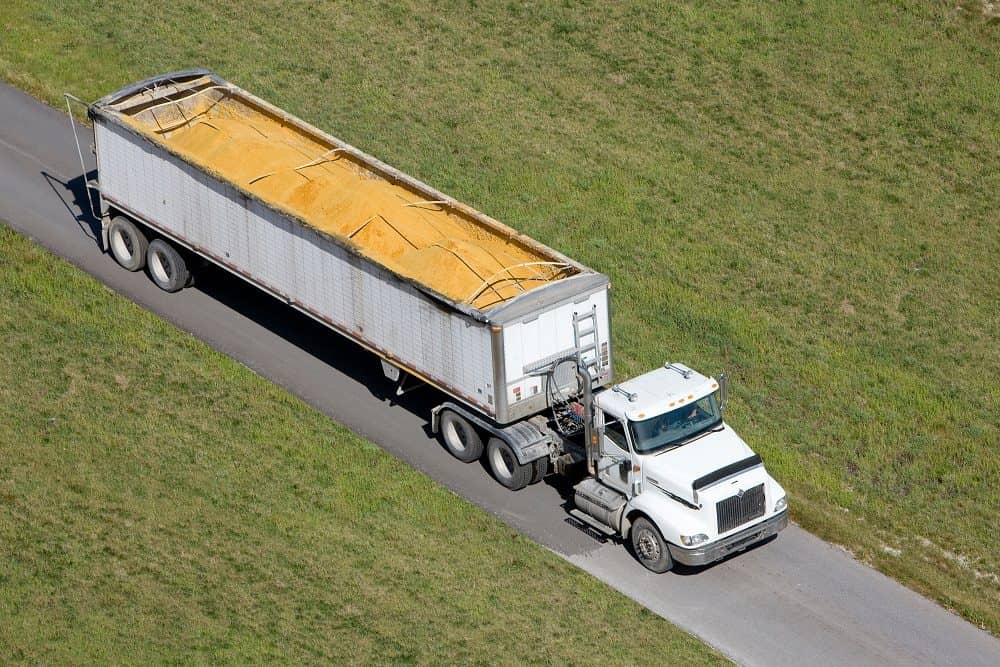
Agricultural groups, including the Soy Transportation Coalition, have argued for years that heavier trucks equipped with additional axles can move more grain while reducing the total number of trips required to transport crops from farms and grain elevators.
“This is really about moving more freight with fewer trucks in a safer and more efficient way,” said Mike Steenhoek, executive director of the coalition, which represents soybean farmers, processors and agribusiness groups across the country.
Supporters say the proposal comes at a particularly difficult moment for rural America, as farmers face persistently high fuel prices, elevated input costs and shrinking profit margins. According to the coalition, diesel prices averaged $5.52 per gallon nationally on May 25, adding further pressure to producers already navigating volatile commodity markets and uncertain trade conditions.
Under current federal law, most interstate trucks are limited to 80,000 pounds using a standard five-axle configuration. The proposed pilot program would allow participating states to authorize six-axle trucks weighing up to 91,000 pounds while maintaining existing federal trailer length limits.
Backers contend the additional axle is critical because it distributes weight more evenly across the roadway while also improving braking capacity. The coalition cited Federal Highway Administration research concluding that six-axle trucks operating at 91,000 pounds can achieve shorter stopping distances than conventional five-axle trucks operating at lower weights.
The proposal has become especially important to grain shippers because transportation efficiency directly affects profitability in rural communities far from export terminals and processing facilities.
According to calculations provided by the Soy Transportation Coalition, a grain elevator handling 6 million bushels annually would require 838 fewer truck trips each year if allowed to use six-axle, 91,000-pound semitrailers instead of conventional trucks. That reduction would translate into 67,040 fewer miles driven annually and save roughly 8,000 gallons of diesel fuel — equivalent to more than $44,000 in fuel costs at current prices.
The organization estimates the same reduction in fuel use would prevent approximately 179,600 pounds of carbon dioxide emissions annually.
For individual farmers, the savings are smaller but still meaningful. Using the coalition’s example of a 1,000-acre farm producing soybeans and corn, a producer hauling grain 40 miles to market could reduce annual fuel costs by roughly $756 through fewer trips and increased hauling capacity.
Steenhoek said many Midwestern states already allow higher truck weights on state and local roads, particularly during harvest seasons, but interstate restrictions often create inefficiencies once trucks reach federal highways.
“There’s already extensive real-world experience with these configurations at the state level,” Steenhoek said. “The evidence demonstrates they can improve efficiency while maintaining safety.”
The proposal also arrives as rural trucking companies confront persistent labor shortages. The coalition estimates that a grain elevator restricted to current federal weight limits would require more than 1,600 additional driving hours annually to haul the same amount of grain — effectively requiring another full-time driver at a cost approaching $100,000 per year in salary and benefits.
Industry groups argue that reducing the number of trips required could ease pressure on a shrinking pool of commercial drivers, particularly in rural regions where hiring qualified workers has become increasingly difficult.
Still, heavier truck proposals have historically faced resistance from some highway safety organizations and infrastructure advocates concerned about bridge wear and long-term maintenance costs. Supporters of the amendment counter that road damage is tied not only to vehicle weight, but also to the total number of trucks using highways, and argue that fewer trips could offset infrastructure impacts.
The amendment’s inclusion in the committee-approved legislation marks one of the most significant advances in years for advocates seeking to modernize federal truck weight rules. Whether it survives the broader congressional debate over transportation spending remains uncertain.
But for farm groups confronting rising costs across nearly every part of the supply chain, the measure represents a rare opportunity to cut expenses without expanding roads or requiring major new infrastructure investments.
“This is one of those areas,” Steenhoek said, “where efficiency, safety and environmental benefits can all align.”

