
The visit was brief, but its implications could stretch across Indiana and the Midwest for decades.
When Stephen Vaden stepped off a plane in Indianapolis last Thursday, he wasn’t just touring office space—he was advancing a sweeping federal reorganization that could reshape how American agriculture is managed, and how closely the government operates to the farmers it serves. For Indiana, a state already steeped in production agriculture and ag biosciences, the stakes are unusually high.
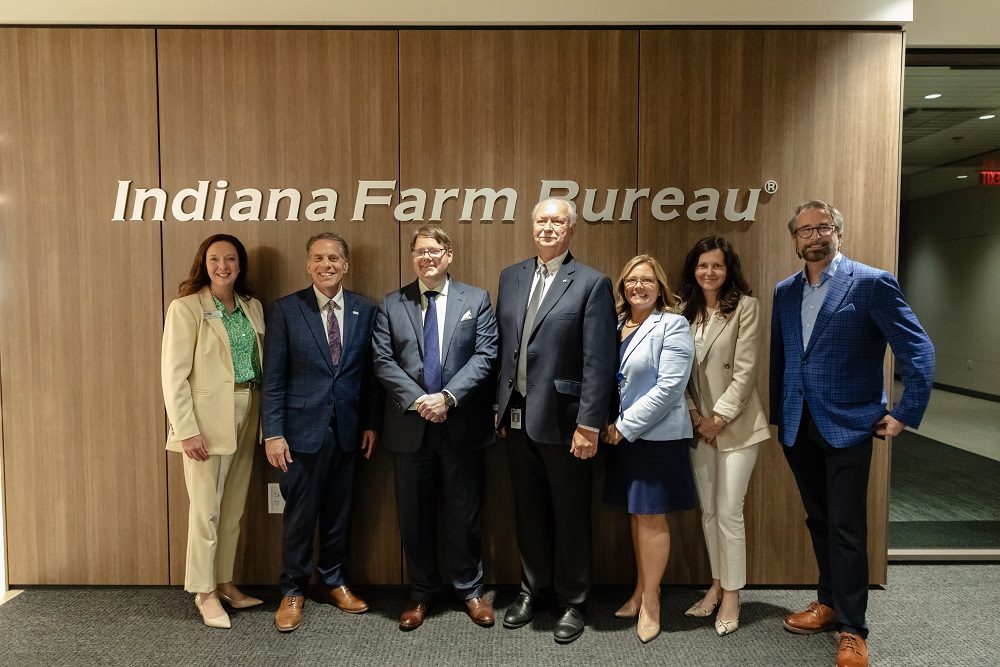
“We’ve looked at office space which USDA might occupy as part of its relocation to Indianapolis as one of five hubs that we’ve chosen across the country,” said Vaden, describing a multi-stop tour that included downtown offices, nearby commercial space and even facilities connected to Purdue University.

“We’ve seen office space downtown [in Indianapolis], we’ve seen office space just a little ways away from it, we’ve talked about space that might be available at Purdue University, and we’ve met with some of Indiana’s agricultural leaders to learn about all of the fusion and synergies that can benefit from USDA’s relocation here,” he said.
The move is part of a broader restructuring by the United States Department of Agriculture that will shift thousands of employees out of Washington and into five regional hubs, including Indianapolis. Already, the agency has announced that the city will serve as the new headquarters for the Supplemental Nutrition Assistance Program, a cornerstone of federal food policy that touches millions of Americans.
But for Indiana’s farmers and agribusinesses, the significance runs deeper than a single program.
Bringing USDA personnel into central Indiana places federal decision-makers within driving distance of row-crop farms, livestock operations, ethanol plants and ag-tech startups. It collapses the physical and bureaucratic distance that has long separated policy from practice. Farmers navigating conservation programs, crop insurance questions or rural development funding could soon find those conversations happening face-to-face rather than through distant offices in Washington.

Vaden suggested the relocation could extend well beyond nutrition programs.
“I’ve been particularly interested in thoughts about what other areas of USDA, in addition to our food and nutrition service, which we have already announced will be relocating here to Indiana, might make sense to come to our new hub,” he said.
That possibility has captured the attention of Indiana’s agricultural leadership, who see the move as a catalyst for both economic growth and policy influence. The presence of USDA’s farm production and conservation teams, for example, could tighten coordination on soil health initiatives and climate-smart practices—areas where Indiana farmers are already experimenting with cover crops, carbon markets and precision agriculture. Rural development offices, if relocated, could accelerate broadband expansion, housing investment and infrastructure funding in small towns that have struggled to attract federal attention.
The economic ripple effects are equally significant. A large federal workforce brings stable, high-skilled jobs and a demand for professional services, from legal and consulting work to data analytics and research partnerships. For agribusinesses clustered around Indianapolis and West Lafayette, proximity to USDA regulators and program administrators could streamline approvals, shorten feedback loops and encourage more public-private collaboration.
Vaden pointed to Indiana’s economic profile as a key factor in the agency’s decision.
“You have a multiplicity of employers that have a minimum of about 2,500 employees. It’s a diversified economy, but it’s also focused on ag and bio-technology. In other words, you’re at the cutting edge of technology. You’ve got a lot of things dealing with chemistry and if that’s going to fit in well with so much of what USDA does as agriculture is increasingly becoming high tech,” he said.
That convergence—between federal oversight and a rapidly evolving agricultural economy—could amplify Indiana’s role in shaping national farm policy. With USDA staff embedded in the region, local stakeholders may gain earlier insight into regulatory changes and more opportunities to influence how programs are designed and implemented.
Still, the transition is unfolding in stages. Vaden emphasized that additional announcements are expected in the coming months, as different divisions of USDA evaluate whether and how to relocate.
“We’re on track, We’re doing it mission area by mission area. We’re doing that intentionally, because we know every mission area is different, and we want to give each mission area the attention that it is due, and they will have different processes uh that we need to go through with the employees as part of the relocation. But we’ve still got our farm production and conservation mission area, our rural development mission area, among others that we have yet to announce. There’s our trade mission area, our marketing and regulatory mission area. Those will all be announced as we head towards summer, and then from there, it’s get it into action,” said Vaden.
Indianapolis is one of five cities selected for the new regional hubs, alongside Raleigh, North Carolina; Kansas City, Missouri; Fort Collins, Colorado; and Salt Lake City, Utah. The reorganization, first announced last summer, is intended to reduce costs, streamline operations and place USDA personnel closer to the communities they serve. The agency has cited the high cost of living in Washington as a driving factor, noting that the capital will retain a smaller footprint of roughly 2,000 employees.
For Indiana, however, the shift represents more than a redistribution of federal offices. It signals a potential realignment of influence—one that could anchor national agricultural policymaking more firmly in the Midwest, where the consequences of those decisions are felt most immediately.
If the relocation proceeds as planned, with personnel in place by early fall, Indiana farmers may soon find that the federal government is no longer a distant presence—but a neighbor.
CLICK BELOW for Hoosier Ag Today’s radio news report: