
The House of Representatives on Thursday approved a sweeping overhaul of federal agriculture policy, passing the Farm, Food, and National Security Act of 2026 in a narrow 224-200 vote after days of intense negotiations and overnight debate.
The measure marks the first time since 2018 that a farm bill has cleared the House, underscoring both the urgency of updating farm policy and the political hurdles that have stalled previous efforts. Lawmakers debated the legislation for two days, with discussions stretching into the early hours of Thursday morning before final passage.
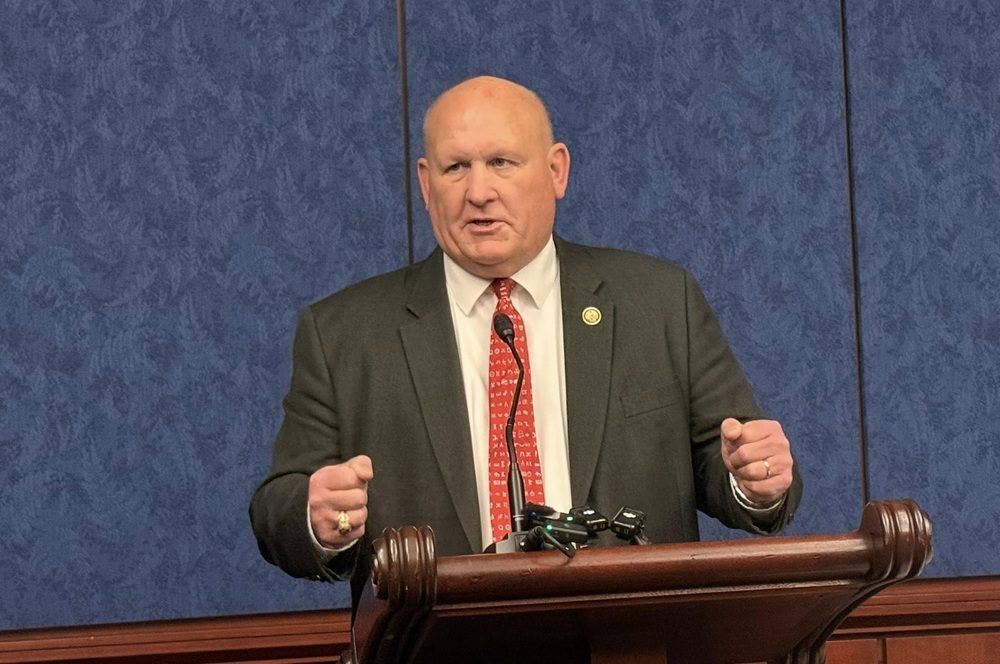
House Agriculture Committee Chairman Glenn Thompson (R-Pa.) framed the vote as a necessary response to mounting economic pressure in rural America.
“Working in Congress on behalf of our nation’s farmers, ranchers, and rural communities is an honor — even when the work requires debating the farm bill through the night,” Thompson said. “I can think of no more important work than championing the Farm, Food, and National Security Act of 2026, and I am extremely pleased to see this bill pass out of the House of Representatives with a strong bipartisan vote.
“It is clearer every day that farm country needs updated policy that reflects current challenges, and the 2026 farm bill fills that gap. I look forward to seeing Chairman Boozman and the Senate make progress on this important legislation so we can get the Farm, Food, and National Security Act of 2026 sent to President Trump’s desk as soon as possible.
“I especially want to thank all parties who were involved in the negotiations that allowed the farm bill to proceed to the floor and secure a future vote on year-round E15. Members of the Biofuels Caucus are tireless champions for rural America, and I look forward to joining them May 13 in advancing that important legislation.”
The final vote reflected a fragile coalition. Fourteen Democrats broke with their party to support the bill, including Sanford Bishop, Jim Costa and Gabe Vasquez, many of whom represent agriculture-heavy districts and cited the need for stability amid volatile farm income and rising costs.
Rep. Jim Baird (R-Ind.), a member of the House Agriculture Committee, emphasized the stakes for rural economies.
“I am extremely proud to represent a rural district where agriculture is not just part of the economy, it is the economy,” Baird said. “Our landscape is defined by corn and soybean fields that feed our country, fuel our bioeconomy, and supply global markets. The Farm Bill supports the very future of communities like mine.”
“I am proud of the work I have done on this bill, and I am also very pleased that several of my priorities are included in this bill: the Increased TSP Access Act, Strengthening Local Processing Act, NSF and USDA Interagency Research Act, and the Plant Biostimulant Act,” Baird added. “Each of these provisions will provide necessary support to our farmers and our great agriculture industry. I urge the Senate to take up this bill and quickly pass it to deliver the certainty our farmers deserve.”
Rep. Mark Messmer (R-Ind.) praised the legislation as a long-overdue boost for agricultural communities.
“I am proud that today House Republicans stood up for the American farmer by passing the 2026 Farm Bill. Hoosier farmers, ranchers, and rural communities will benefit greatly from this bipartisan legislation, which stimulates demand for American-grown products and boosts affordability at the grocery store. Our agriculture community richly deserves this much-needed support, and I urge my Senate colleagues to do their part and quickly pass this legislation to get it to the President’s desk for his signature. The American farming community has waited long enough,” said Messmer.
The legislative process also reshaped key provisions. In a separate 280-142 vote, the House adopted an amendment stripping controversial pesticide liability protections from the bill. The removed language would have limited the ability of states and courts to penalize pesticide manufacturers for failing to include health warnings beyond those recognized by the Environmental Protection Agency.
Lawmakers also removed a provision allowing year-round sales of E15 gasoline, opting instead to consider it in a standalone vote scheduled for May.
Even with those changes, the bill includes a wide range of updates to farm programs, conservation funding, trade promotion efforts and rural development initiatives. It also incorporates a fix to California’s animal welfare law, Proposition 12 — a priority long sought by pork producers.
Agricultural groups largely welcomed the legislation. The American Farm Bureau Federation called it a long-overdue modernization effort, while the American Soybean Association pointed to expanded tools to help farmers navigate economic uncertainty.
Industry organizations representing dairy and pork producers also praised the measure’s support for the farm safety net, trade programs and animal health initiatives.
Still, the bill’s future remains uncertain as it heads to the Senate, where lawmakers are expected to revise key provisions to meet bipartisan thresholds. Senate Agriculture Committee Chairman John Boozman (R-Ark.) has indicated the chamber may strip out contentious elements to secure enough votes for passage.
For many lawmakers and industry leaders, the urgency is clear: with farm incomes under pressure and production costs rising, delays in enacting a new five-year farm bill could prolong instability across rural America.