
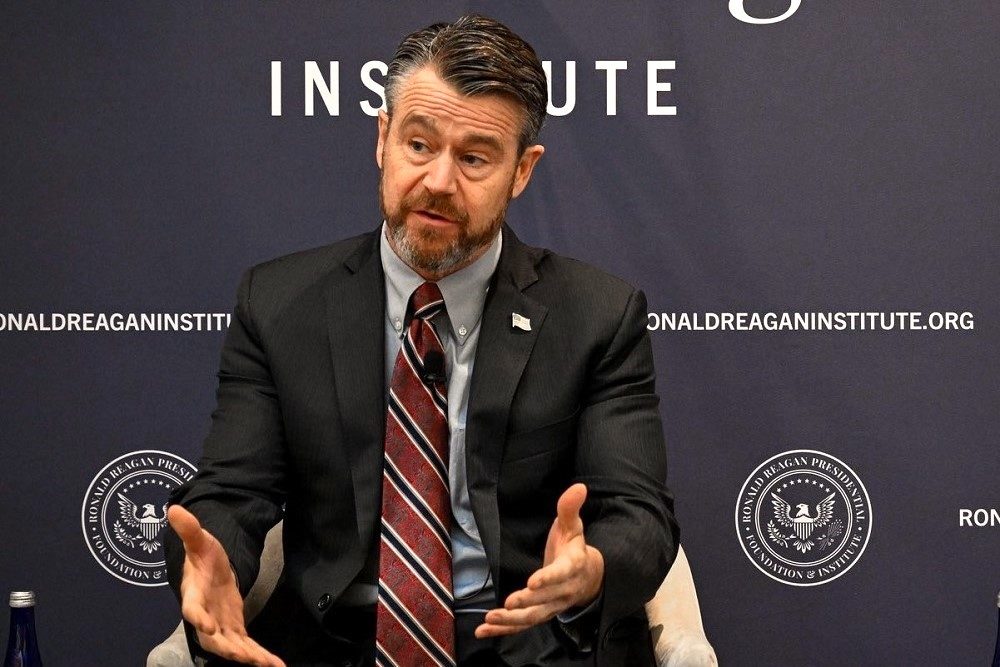
A bipartisan group of U.S. senators—including Sen. Todd Young (R-IN)—is urging the Trump administration to strengthen and renew the U.S.-Mexico-Canada Agreement (USMCA) ahead of a required six-year review, arguing that the trade pact has become a cornerstone of economic stability for American agriculture.
In a letter to U.S. Trade Representative Jamieson Greer, lawmakers emphasized that the agreement has significantly expanded export opportunities for U.S. farmers while reinforcing supply chains across North America. The appeal, signed by more than 40 senators from both parties, reflects a rare area of consensus in Washington on trade policy.
The United States exported $176 billion in agricultural goods in 2024, maintaining its position as the world’s largest agricultural exporter. Much of that growth, senators said, has been driven by increased access to Canadian and Mexican markets under the current agreement, which took effect in 2020 as a replacement for NAFTA.
“Canada and Mexico are, for many states, the largest and second-largest export markets,” the senators wrote, noting that commodities such as corn, wheat and oilseeds have sustained strong trade surpluses with both countries. The agreement’s provisions — including streamlined customs procedures, science-based food safety rules and intellectual property protections — have allowed farmers and agribusinesses to operate with greater predictability.
That predictability, lawmakers argue, is critical. Modern agriculture depends on tightly integrated supply chains that move goods across borders multiple times before reaching consumers. Disruptions or uncertainty in trade policy can ripple quickly through rural economies, affecting everything from crop prices to equipment investment.
The upcoming review of the agreement, mandated every six years, has raised concerns among agricultural groups that any weakening of its terms could destabilize those gains. The senators urged Greer to work closely with Congress and industry stakeholders to not only preserve the agreement but expand market access where possible.
In addition to Young, other senators who have signed the letter include Sen. John Boozman (R-AR), who serves as Chairman of the Senate Agriculture Committee, and Sen. Amy Klobuchar (D-MN), who serves as the committee’s Ranking Member.
The letter also drew support from farm-state Republicans and Democrats alike, underscoring the political importance of export markets to rural constituencies.
Farm groups echoed that message, describing the agreement as indispensable to their members’ livelihoods. Organizations representing soybean, corn and wheat producers said USMCA has ensured reliable demand in neighboring countries while preventing trade disruptions that once plagued cross-border commerce.
For American farmers, the stakes extend beyond simple export volumes. The proximity of Canada and Mexico offers logistical advantages that more distant markets cannot match, reducing transportation costs and delivery times. Just as importantly, the agreement locks in rules-based trade, limiting the risk of sudden tariffs or regulatory barriers.
Economists note that this stability has helped farmers weather broader volatility, from fluctuating global commodity prices to climate-related disruptions. By anchoring North American trade, USMCA has provided a buffer that supports income and long-term planning in the agricultural sector.
As negotiations over the review begin, lawmakers are signaling that any rollback of the agreement’s core provisions would face resistance on Capitol Hill. Instead, they are pressing for updates that could further open markets and strengthen enforcement mechanisms.
“The certainty afforded by a stable agreement is essential,” the senators wrote, framing the renewal not just as a trade issue but as a matter of economic security for rural America.
With the review process looming, the debate over USMCA is likely to become a focal point in broader discussions about trade, supply chains and the future of U.S. agriculture — an industry that remains deeply tied to its North American neighbors.
CLICK HERE to read the full text of the letter.