
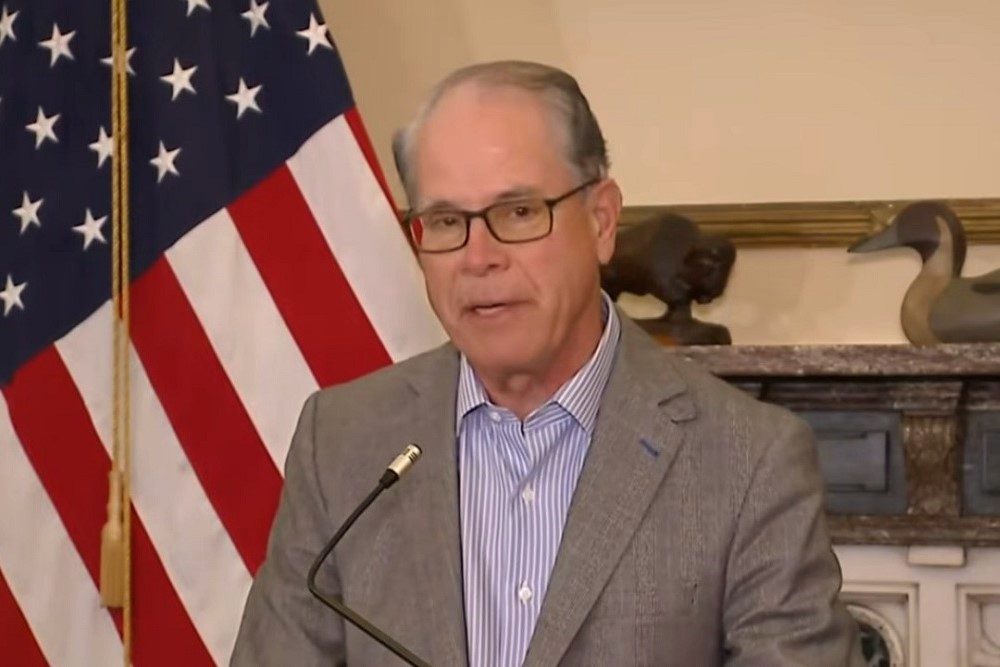
Just days after Indiana drivers began paying higher taxes on gasoline, Gov. Mike Braun on Wednesday declared a temporary suspension of part of the state’s fuel tax, framing the move as urgent relief for residents grappling with rising costs.
The 30-day “gas tax holiday” pauses the state’s 7 percent sales, or “use,” tax on gasoline, effective immediately under an emergency declaration issued by the governor. Braun said the suspension could be extended if economic conditions warrant.
“I am declaring a gas tax holiday to give Hoosiers relief from the pain at the pump from high gas prices,” Braun said in a statement. “Affordability is my top priority.”
The announcement comes less than a week after a previously scheduled increase in Indiana’s gasoline sales tax took effect on April 1—a change that added to the financial strain on drivers already facing surging fuel prices.
As Hoosier Ag Today reported earlier, the state’s per-gallon sales tax rose alongside climbing fuel costs, pushing the total tax burden on gasoline to roughly 71 to 72 cents per gallon when combined with state and federal levies. That increase was driven in part by a pricing formula tied to fuel costs, which have spiked amid global market disruptions linked to the recent U.S.-Israeli military action against Iran.
Since late February, gasoline prices in Indiana have climbed sharply, rising by more than a dollar per gallon in many areas. Against that backdrop, Braun’s tax holiday represents a reversal—at least temporarily—of the upward pressure created by the state’s variable tax structure.
However, Braun’s office confirmed to Hoosier Ag Today that the temporary sales tax suspension applies only to gasoline and does not include diesel fuel. That distinction is drawing concern from Indiana’s agricultural sector, where diesel is the primary fuel used to power tractors, planters and other heavy equipment.
With spring planting underway, farmers are entering one of the most fuel-intensive periods of the year, including the use of large sprayers to apply crop protection products across fields. Without a comparable tax break on diesel, producers say they will continue paying elevated fuel costs while other motorists see temporary relief—potentially squeezing already tight margins and placing additional financial pressure on farm operations during a critical window of the growing season.
The governor also called on gasoline retailers to ensure that the tax savings are passed directly to consumers, warning that the state will be closely monitoring compliance. He said officials would be “patrolling the pumps” to track pricing behavior and verify that drivers see the intended relief.
In addition, Braun urged the state attorney general to enforce protections against price gouging, signaling a more aggressive stance toward retailers who fail to reflect the tax suspension in their pricing.
Economists caution that while tax holidays can provide short-term relief, their long-term impact depends on how fully savings are transmitted to consumers and how global oil markets evolve.
For many Hoosiers, the next month could offer a modest reprieve after weeks of escalating costs. For farmers, however, the absence of diesel fuel from the tax holiday means those relief efforts may bypass a key segment of the state’s economy at one of the most important times of the year.
CLICK BELOW for Hoosier Ag Today’s radio news report:
CLICK BELOW to watch Gov. Braun’s announcement and press conference: