Purdue University is preparing for another major leadership transition, one that could help shape the future of Indiana agriculture, agricultural research, veterinary medicine and higher education for years to come.
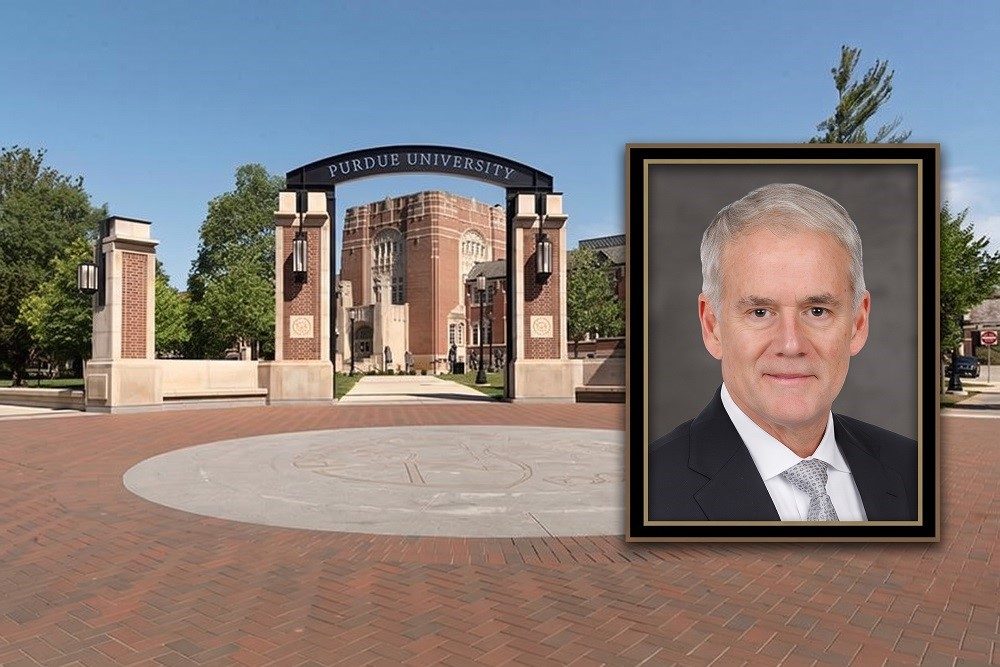
Retired U.S. Air Force Lt. Gen. Jay B. Silveria, president of the University of Arkansas System, will become Purdue’s 14th president following his unanimous election Thursday, Nov. 5, by the university’s Board of Trustees.
Silveria will succeed Mitch Daniels, who has served as interim president since July, effective Feb. 1, 2027.
His appointment comes as Purdue navigates a period of leadership change, following the departure of former President Mung Chiang, who announced in May that he would leave Purdue to become president of Northwestern University.
For Purdue students, alumni, faculty, agricultural producers and industry partners, Silveria’s arrival represents an opportunity to strengthen the university’s nationally recognized academic programs while reinforcing its longstanding commitment to Indiana’s agricultural economy and communities.
A Land-Grant Mission with Statewide Impact
Silveria assumes leadership of one of the nation’s premier public research universities, an institution whose influence extends well beyond its West Lafayette campus.
Purdue enrolls more than 111,000 students across multiple campuses, including more than 57,000 at its main campus locations in West Lafayette and Indianapolis. The university ranks among the nation’s top 10 public universities and has frozen main-campus tuition for 14 consecutive years, strengthening its commitment to affordability and accessibility.
But Purdue’s significance to Indiana extends far beyond enrollment figures and academic rankings.
As Indiana’s land-grant research university, Purdue plays a critical role in advancing agricultural productivity, developing new technologies, training the next generation of agricultural leaders and delivering research-based information to farmers and communities throughout the state.
That responsibility includes directing two nationally significant institutions: Purdue’s College of Agriculture and its College of Veterinary Medicine.
Silveria’s experience leading a major public university system with extensive agricultural and extension operations could prove particularly valuable as Purdue continues connecting research, education and public service.
“The common principle is that a public university’s value is measured not only by its academic reputation but also by what its knowledge and graduates contribute to society,” Silveria said, drawing comparisons between Purdue’s land-grant mission and the University of Arkansas System’s statewide responsibilities.
That philosophy could help guide Purdue’s agricultural research priorities, extension outreach and partnerships with Indiana farmers, agribusinesses and rural communities.
Agriculture and Veterinary Medicine at the Center of Purdue’s Mission
Purdue’s College of Agriculture is nationally recognized for its leadership in agricultural science, education and research. Its work reaches across crop production, livestock systems, agricultural economics, natural resources, food science and emerging technologies that are increasingly important to the future of farming.
The university’s College of Veterinary Medicine also serves as a major resource for Indiana’s livestock producers, animal agriculture industries and veterinary professionals, combining veterinary education, scientific research and clinical expertise.
Together, these colleges help Purdue address some of agriculture’s most pressing challenges, including animal health, disease prevention, agricultural sustainability, food security and the economic pressures confronting producers.
Silveria will ultimately help direct the university’s broader institutional priorities, including the resources, strategic investments and partnerships that support both colleges.
His leadership could influence how Purdue strengthens agricultural research, supports faculty and students, expands industry collaboration and translates scientific discoveries into practical benefits for Indiana agriculture.
Silveria will also provide leadership for Purdue Extension, the university’s statewide outreach network that brings research-based education, agricultural expertise and practical resources directly to Indiana residents across all 92 counties. Through its partnerships with farmers, agribusinesses, families, community leaders and local organizations, Purdue Extension serves as a vital link between the university’s research enterprise and the communities it was established to support. Under Silveria’s leadership, Purdue Extension will remain an important component of the university’s land-grant mission, helping translate discoveries from Purdue’s College of Agriculture, College of Veterinary Medicine and other academic programs into practical solutions for Indiana’s agricultural producers, rural communities and broader economy.
While Silveria’s announcement did not outline specific agricultural policy or research initiatives, his experience managing a complex public university system offers a foundation for understanding how distinct academic missions can work together toward statewide economic and societal goals.
Purdue Board of Trustees Chair Gary Lehman said Silveria’s diverse leadership experience made him the right choice to guide the university.
“Jay’s career reflects a consistent commitment to preparing people and organizations to accomplish consequential missions,” Lehman said.
Lehman highlighted Silveria’s experience leading organizations that require disciplined execution, developing future leaders, building educational enterprises and managing broad public higher-education responsibilities.
The board, Lehman said, is excited to welcome Silveria and work with him to advance Purdue’s mission.
From the Military to Public Higher Education
Silveria has spent his career developing people, building organizations and connecting institutional missions with measurable results.
He has served as president of the University of Arkansas System since January 2025. The system enrolls more than 80,000 students and employs over 30,000 people, encompassing a flagship research university, medical sciences campus, regional universities, community colleges, a law school and agricultural and public-service divisions.
That experience has required Silveria to understand the distinct responsibilities of individual institutions while coordinating broader systemwide priorities.
Before joining the University of Arkansas System, Silveria served as associate vice president and executive director of Texas A&M University and the Bush School of Government and Public Service in Washington, D.C., from 2020 to 2024.
There, he helped launch an urban graduate-school educational enterprise, coordinating academic leaders, faculty, administrators, students and outside partners.
He also served as superintendent of the U.S. Air Force Academy from 2017 to 2020, overseeing an institution responsible for academic instruction, military preparation, athletics and character development.
That experience could provide valuable perspective as Purdue works to prepare students for leadership roles in agriculture, business, science, public service and other industries.
Silveria said he looks forward to supporting Purdue’s faculty, staff, researchers and students while building partnerships and connecting institutional goals with public value.
“I am excited for the opportunity to meet and work alongside faculty, students, staff, alumni, industry collaborators and the people of Indiana,” he said.
A Military Career Built Around Leadership
Silveria’s leadership experience extends well beyond university administration.
A 1985 graduate of the U.S. Air Force Academy, he served in numerous command positions during a distinguished military career, including deputy commander of the Combined Air Force Component at U.S. Central Command in Southwest Asia.
In that role, he was responsible for command and control of air operations across a 20-nation region, including operations in Afghanistan, Iraq and Syria.
He also commanded the U.S. Air Force Warfare Center at Nellis Air Force Base in Nevada and held leadership positions at Vandenberg Air Force Base in California and in Baghdad, Iraq.
Silveria commanded a fighter wing, an air operations center and a fighter squadron. His military decorations include the Distinguished Service Medal and Bronze Star, along with multiple Air Medals.
He is a command pilot with more than 3,900 flight hours in multiple aircraft, including the F-15 and F-35A, and has flown combat missions over the Balkans and Iraq.
Silveria also holds a master’s degree in social science from Syracuse University and additional master’s degrees from Air University and the National War College.
A New Chapter for Purdue and Indiana Agriculture
Silveria’s appointment comes at a consequential time for higher education, as universities nationwide confront changing enrollment patterns, financial pressures, political scrutiny and increasing demands to demonstrate their value to students and taxpayers.
For Purdue, those challenges intersect with an agricultural economy facing its own rapidly evolving demands, from technological innovation and global competition to farm profitability, workforce development and animal health.
The university’s ability to connect its research and academic expertise with the needs of Indiana farmers and agricultural businesses will remain central to its land-grant mission.
Silveria said he recognizes the responsibility that comes with leading Purdue and looks forward to learning more about the university’s culture and people.
“I am honored to become the next president of Purdue University, one of the top public research universities in the country,” he said.
His leadership will help determine how Purdue advances that mission in the years ahead — and how its College of Agriculture, College of Veterinary Medicine and broader research enterprise continue serving Indiana agriculture and communities across the nation.
For Purdue alumni, students, faculty and Indiana’s agricultural industry, the next chapter begins Feb. 1, 2027.