
As combines continue rolling across the Corn Belt, growers are facing an agonizing mathematical reality: field diesel hovering near $6 a gallon is burning through cash flows faster than grain can drop into the pit. While diesel costs are adding upwards of $6 per acre in overhead for dryland wheat operations, energy-intensive irrigated farms and rice growers are weathering cost spikes exceeding $52 per acre alongside soaring fertilizer bills tied directly to energy markets.
In a direct effort to stem the bleeding, the White House and USDA have unveiled an $8 billion emergency assistance package—the Harvest Fuel Relief (HFR) program—funded through the Commodity Credit Corporation (CCC) Charter Act.
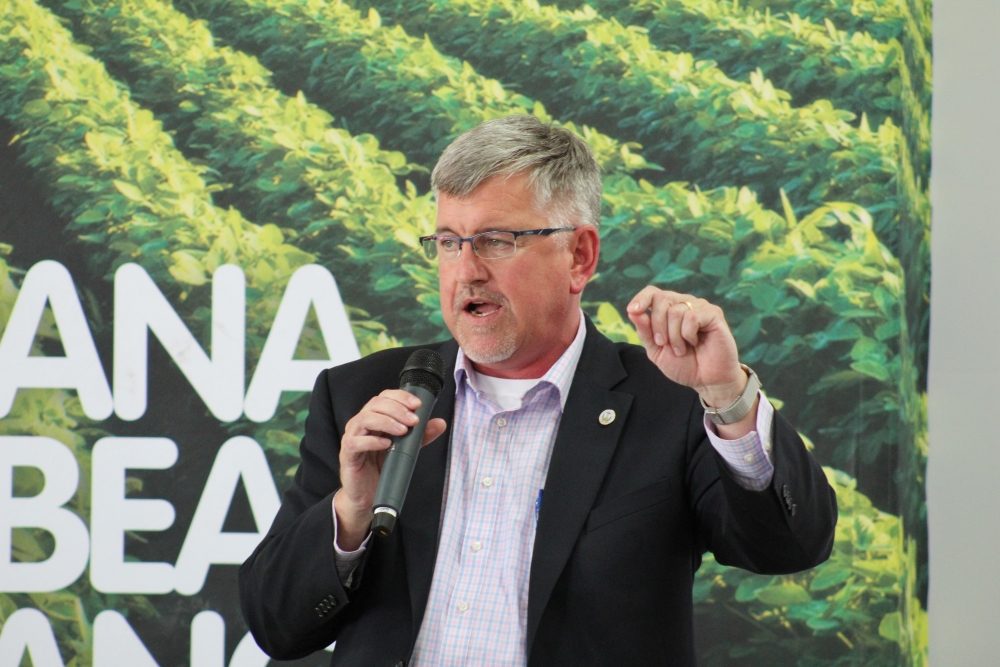
USDA Undersecretary Richard Fordyce emphasized that the department is moving aggressively to put cash back into farm operating accounts, prioritizing conventional row-crop operations out of the gate.
“We were able to identify $8 billion in CCC that could help with what we’re calling the Harvest Fuel Relief program,” Fordyce said. “We’re going to do it in a couple of phases. We’re going to address Title I crops first because the data available for a conventional Title I row-crop farming operation is more readily available.”
Fordyce added that specialty crop producers, non-Title I commodities, and commercial fishermen won’t be left behind, though they will follow in subsequent rollout phases.
Safety Nets: ARC and PLC Payouts Surge
The $8 billion package comes on top of unprecedented safety-net disbursements triggered by key updates inside the Working Families Tax Cuts Act. Lower baseline reference prices that dated back a decade or more were officially modernized, lifting price thresholds to better mirror current high-cost production environments.
As a result, gross national Agriculture Risk Coverage (ARC) and Price Loss Coverage (PLC) payments have reached $13.8 billion this cycle—a dramatic jump from the $1.9 billion issued at this point during the previous payment cycle.
“Last year about this time when we were making payments, the total ARC and PLC payment total nationally was about 1.9 billion,” Fordyce explained. “This year, the total before payment limitations and other factors is 13.8 billion. Two things really that happened was an increase in the pay limitation and the big thing was the increase in reference prices.”
Addressing how critical these updated reference prices are for midwestern growers, Fordyce noted that farm commodity leadership made raising those baseline thresholds a central focus during legislative negotiations.
“I visit with a lot of our commodity organizations, and that was one of the things that they really worked on leading up to the Working Families Tax Cuts Act was that increase in reference prices,” Fordyce said. “Certainly, it makes it more representative of what’s happening on our farms across the country today.”
Combined with earlier disbursements under the Farmer Bridge Assistance (FBA) program, federal direct farm payments are projected to reach a historic $55.4 billion for 2026—accounting for nearly one-third of all net farm income nationwide.
Commodity Credit Corporation Cushion Raises Eyebrows
With federal assistance reaching historic heights, lawmakers on Capitol Hill have raised questions regarding whether the Commodity Credit Corporation—the primary funding vessel for USDA farm programs—is hitting its statutory spending ceiling.
Fordyce pushed back on concerns that the CCC mechanism is being overextended, asserting that the department maintains strict financial safeguards to handle potential market shocks and natural disasters.
“Obviously, we manage CCC very responsibly, and we will always leave a little bit of a buffer there, not knowing what might need to be pulled out of CCC,” Fordyce stated. “Some of our standing disaster programs—either a natural disaster or something else—could influence additional draws off of CCC. So we’re pretty comfortable with that cushion that we have left in the Commodity Credit Corporation.”
Agency Streamlining and Producer Next Steps
Beyond direct liquidity, Fordyce noted that USDA leadership is actively evaluating internal operations to streamline disaster response times and eliminate unnecessary bureaucratic hurdles for producers in the field.
“We are looking—from a leadership perspective, whether it’s Secretary Rollins, myself, or the Deputy Secretary—at things that we’re aware of and asking: Can we change the way we do business?” Fordyce noted. “Are we doing business the way we’re doing it because that’s the way we’ve done it for the last 20 or 30 years, or are there ways we can make that interaction with farmers and ranchers easier?”
Producers do not need crop insurance coverage to qualify for HFR payments. FSA will deploy a uniform, formula-based calculation using planted acres, Economic Research Service (ERS) cost-of-production estimates, and WASDE yield/price metrics.
FSA strongly advises all producers to log into their USDA accounts immediately to ensure profiles are properly linked ahead of the January application window.