As American farmers push through harvest with tight margins, rising input costs and growing uncertainty over international markets, a renewed trade truce between the United States and China offers a temporary reprieve—but little assurance of a lasting breakthrough for U.S. agriculture.
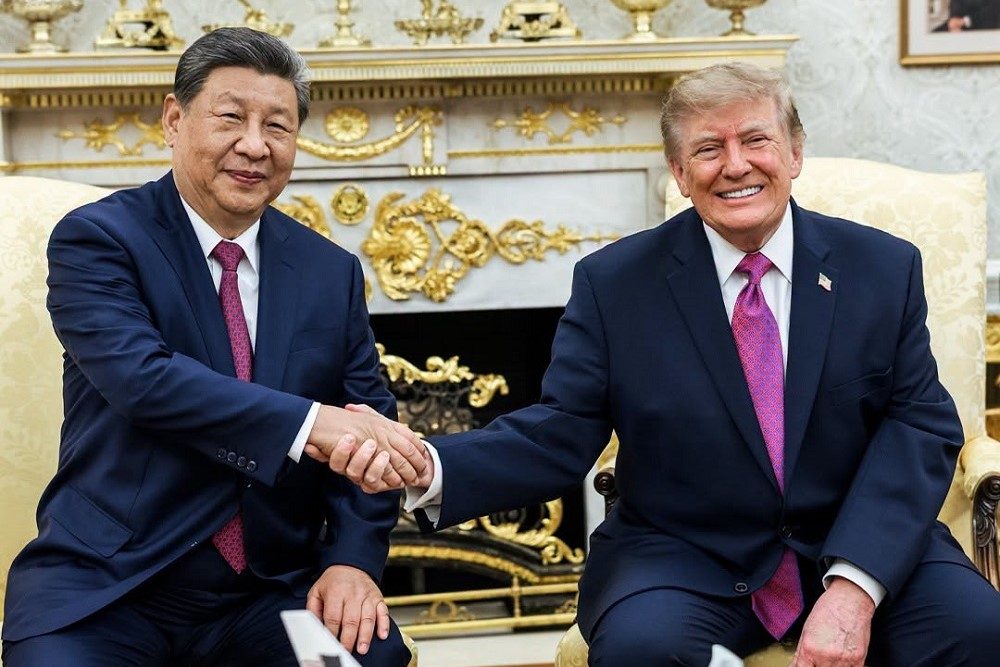
U.S. and Chinese officials have agreed to extend their trade truce through Jan. 10, maintaining a pause on new tariffs and trade restrictions as President Trump and Chinese President Xi Jinping meet in Washington this week. The extension gives both countries additional time to negotiate, but it leaves American agricultural exporters facing many of the same barriers that have limited access to one of their most important overseas markets.
For soybean, sorghum, corn and livestock producers, the stakes extend well beyond diplomatic headlines. China remains a major buyer of American agricultural commodities, but retaliatory tariffs, competition from South American suppliers and uncertainty surrounding Chinese purchasing commitments continue to complicate export opportunities.
According to reporting by Reuters and The Associated Press, analysts expect the two countries to reaffirm earlier agricultural purchasing commitments rather than announce a sweeping new farm trade agreement.
That leaves U.S. farmers waiting for concrete results from negotiations that could shape export demand, commodity prices and farm income well into the next marketing year.
Soybeans Remain at Center of Trade Dispute
For U.S. soybean producers, the trade negotiations carry particularly significant consequences.
China is the world’s largest soybean importer and has historically accounted for approximately half of all U.S. soybean exports in recent years. Before Trump first took office, that share approached two-thirds, underscoring how much American producers’ reliance on the Chinese market has shifted amid years of trade tensions.
Beijing has increasingly used soybean purchases as leverage in trade disputes with Washington. China’s expanding access to South American supplies, particularly from Brazil, has given Chinese importers greater flexibility to reduce or suspend purchases of U.S. soybeans when trade relations deteriorate.
That competitive advantage remains in place.
China’s 10% retaliatory tariff on U.S. soybeans and other agricultural products continues to make American commodities more expensive than competing shipments from Brazil and other suppliers.
State-owned Chinese grain traders COFCO and Sinograin have returned to the U.S. soybean market this summer, purchasing American supplies despite cheaper alternatives available from Brazil. However, private Chinese soybean processors have largely stayed away from U.S. cargoes because of the remaining tariff.
A U.S. soybean exporter told Reuters that removing the tariff would bring the price of American soybeans shipped through Pacific Northwest ports in line with Brazilian supplies, potentially making U.S. beans more competitive with Chinese buyers.
The distinction is important for American farmers: Government-directed purchases may help China meet its existing commitments, but sustained demand from private importers will be critical to restoring a more dependable commercial market.
Meanwhile, U.S. soybean producers have worked to diversify their export markets and expand domestic demand through biofuel production. Those efforts provide additional outlets, but China remains a critical component of the American soybean industry’s long-term export strategy.
China Meeting Some Commitments, Falling Short on Others
The results of China’s previous agricultural purchasing commitments have been mixed.
Following last year’s summit in Busan, South Korea, and a subsequent meeting in Beijing in May, China committed to expanding purchases of American agricultural products.
Analysts and traders believe China remains on pace to fulfill its commitment to purchase 25 million metric tons of U.S. soybeans annually. However, its broader pledge to import $17 billion annually in U.S. grains, meat and other agricultural products appears considerably less certain.
As of Sept. 10, the U.S. Department of Agriculture had confirmed nearly 10 million metric tons of soybean sales to China from the current crop. Traders and analysts also believe at least half of the 6 million metric tons of U.S. soybean sales reported to undisclosed destinations through that date could represent additional Chinese purchases.
The picture is less encouraging for other major U.S. crops.
China has yet to purchase any U.S. corn for the current marketing season, while sorghum purchases have fallen short of expectations among many traders.
At the same time, substantial Chinese purchases of corn and sorghum from Brazil indicate that demand for imported grain remains present. Disruptions to Black Sea shipping resulting from the Russia-Ukraine war have also reduced Ukrainian corn shipments to China, potentially creating additional opportunities for American exporters.
For U.S. producers, the challenge is converting that demand into actual sales of American grain.
Sorghum Producers Push for Enforceable Commitments
The National Sorghum Producers is urging the Trump administration to secure a concrete, enforceable annual commitment from China to purchase between 5 million and 7 million metric tons of U.S. sorghum.
That would represent an increase over the approximately 4 million to 5 million metric tons China imported annually from the United States before the trade war.
Sorghum producers are also seeking relief from retaliatory tariffs that place American grain at a competitive disadvantage against shipments from other exporting countries.
The American Soybean Association and other farm organizations have called on Trump to use the Washington meetings to press Beijing to eliminate those tariffs and solidify its agricultural purchasing commitments.
The groups argue that American farmers need more than temporary buying agreements or short-term pauses in trade restrictions. They are seeking a predictable trading relationship that allows producers, grain handlers and exporters to make investment and marketing decisions with greater confidence.
The negotiations also carry implications for the broader agricultural supply chain.
Farm organizations are urging the administration not to reinstate fees on Chinese-built or Chinese-operated vessels entering U.S. ports. The fees, which can amount to millions of dollars per port call, were suspended shortly after taking effect last year, but that suspension is scheduled to expire in November—during the heart of the U.S. harvest.
A return of those charges could add another layer of expense to agricultural exports at a time when producers are already contending with elevated production and transportation costs.
American Soybean Association Calls for Lasting Trade Partnership
The American Soybean Association welcomed the two-month extension of the trade truce, while emphasizing that continued negotiations must produce meaningful progress for U.S. soybean farmers.
“Soybean farmers want to see this momentum continue with strong purchases of U.S. soy and a lasting trade partnership with China,” said ASA President and Ohio soybean farmer Scott Metzger.
The association said it hopes the ongoing summit will build on recent progress and deliver additional positive developments for American soybean producers and agricultural trade.
ASA is seeking greater certainty and long-term market opportunities, including stronger Chinese purchases and the removal of trade barriers that have made U.S. soybeans less competitive in the global marketplace.
The organization has also joined other agricultural groups in pressing for a more stable, enforceable framework governing agricultural trade between the two countries.
For farmers making marketing decisions during harvest, the distinction between a temporary truce and a lasting agreement is significant. A pause in additional tariffs can provide some breathing room, but it does not eliminate existing retaliatory duties or guarantee that Chinese buyers will purchase American commodities.
Trade Stability Remains the Bigger Issue
Beyond immediate purchasing commitments, U.S. agricultural organizations are pushing the Trump administration to establish a more durable framework for agricultural trade with China.
One proposal would include soybeans, sorghum and other agricultural commodities on a list of non-sensitive trade items covered by a proposed bilateral U.S.-China board of trade.
Under that approach, agricultural commodities could continue moving between the two countries even as Washington and Beijing negotiate more contentious issues involving technology, rare earth minerals and other strategic trade matters.
The two governments agreed to a framework for establishing the trade board in May. Trump and Xi could discuss additional details during their Washington meetings.
For American agriculture, such a mechanism could offer a way to reduce the disruption that has repeatedly accompanied broader U.S.-China trade disputes.
Treasury Secretary Scott Bessent has acknowledged that some Chinese commitments remain unfulfilled, even as China has emerged as a strong buyer of U.S. soybeans in 2026 while lagging in other agricultural purchases.
The broader economic and political stakes are also considerable. Agricultural trade with China remains an important issue for farm country as the November midterm elections approach, with producers facing the combined effects of trade uncertainty, inflation and elevated costs for fuel and other inputs.
Yet analysts cited by Reuters caution that a major new agricultural agreement remains unlikely, with both countries expected to focus on reaffirming existing commitments rather than negotiating a comprehensive new deal.
For farmers across the Midwest, the extension through Jan. 10 keeps negotiations alive—but leaves critical questions unanswered.
Will China remove the tariffs that continue to disadvantage American farm products? Will purchasing commitments extend beyond soybeans to corn, sorghum, meat and other agricultural commodities? And can the two countries establish a trading relationship that delivers the consistency producers need to plan for future growing seasons?
Until those questions are addressed, the trade truce remains a temporary pause in a much larger dispute.
For U.S. farmers harvesting this fall’s crop, the ultimate measure of progress will not be another diplomatic announcement. It will be sustained export demand, improved market access and a more predictable path to selling the commodities they produce.