
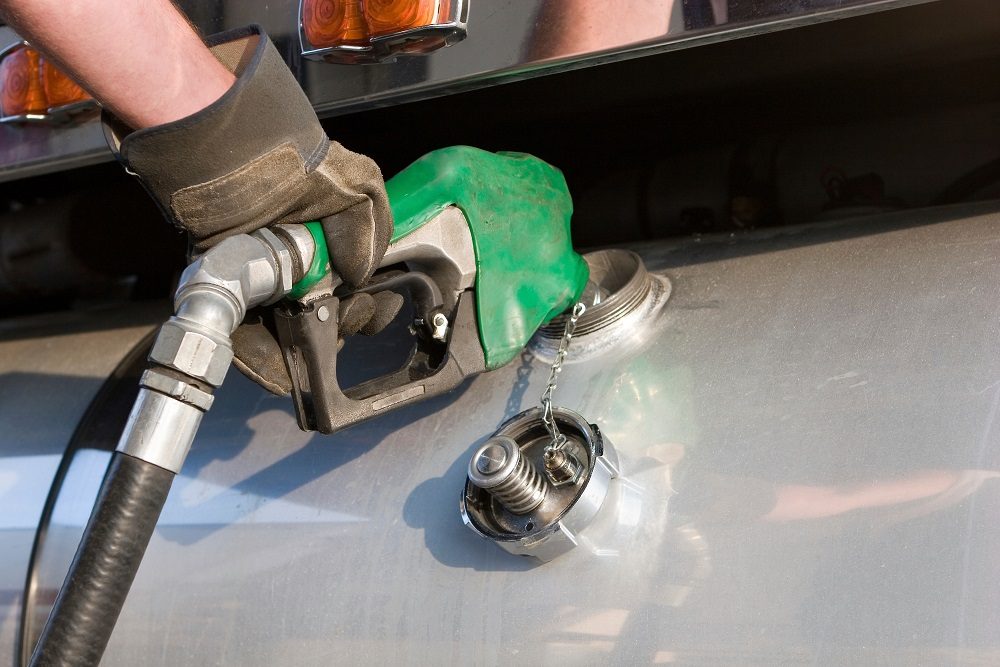
Indiana farmers are facing a record-breaking fuel bill as combines roll through fields across the state, and a potential move by the Trump administration to restrict diesel exports is putting the nation’s energy policy under an increasingly urgent spotlight.
According to AAA, the average cost of on-road diesel in Indiana has climbed to a record-high $6.92 per gallon. Meanwhile, off-road diesel prices are running roughly $5.60 to $6.00 per gallon, depending on delivery volume and market conditions.
For Hoosier producers already confronting tight margins, elevated input costs and uncertain commodity prices, the spike comes at one of the most fuel-intensive times of the agricultural year.
Now, the Trump administration is considering a possible 90-day ban on diesel exports in an effort to increase domestic supplies and ease prices. But while the proposal is drawing support from lawmakers representing farm country, it is also generating significant opposition from energy industry leaders and officials within the administration itself.
The central question for farmers: Could restricting exports deliver meaningful relief during harvest, or could it ultimately make fuel even more expensive?
White House Weighs 90-Day Export Ban
According to a report published Wednesday by Politico, the Trump administration is preparing a plan to halt diesel exports for 90 days, even as disagreements over the proposal intensify within the administration and the oil industry.
The report, citing five people familiar with the discussions, says President Trump is considering announcing the measure by the end of this week. The legal process for implementing such a restriction is still being worked out.
The White House, however, has disputed the report, calling it false. Energy Secretary Chris Wright also said Wednesday that a blanket ban was not being considered, while acknowledging that officials are discussing ways to direct more diesel into the domestic market.
The conflicting accounts leave farmers facing harvest with considerable uncertainty over whether the administration will take action—and whether any action would translate into lower fuel bills.
The proposal has gained momentum following calls from farm-state Republicans, including Senator Chuck Grassley (R-IA) and Representative Ashley Hinson (R-IA-02), who argue that soaring fuel costs are cutting deeply into farm income.
Grassley wrote on social media that high diesel prices were “KILLING FARMERS INCOME,” adding to pressure from agricultural lawmakers for the administration to intervene.
The urgency is particularly acute across the Midwest, where producers depend on diesel to power combines, grain carts, semis, tractors and grain-drying equipment. Unlike many other operating expenses, fuel is a cost farmers must absorb immediately to get the crop out of the field and delivered to market.
For Indiana operations paying nearly $7 per gallon for on-road diesel, even a modest reduction could make a noticeable difference in harvest expenses. But the potential impact of an export ban remains uncertain.
Energy Industry Warns of Unintended Consequences
While the possibility of a temporary export restriction has drawn support from some agricultural lawmakers, energy officials and industry representatives warn that a ban could create a new set of problems for farmers and consumers.
The United States is the world’s largest diesel exporter, and its refineries produce diesel alongside gasoline, jet fuel and other petroleum products. Restricting the ability to sell diesel overseas could leave refiners with excess fuel and limited storage capacity.
That, in turn, could force refineries to reduce production, potentially tightening supplies of multiple fuels and driving prices higher over time.
Wright laid out that concern during a Climate Week event in New York on Wednesday, arguing that limiting diesel exports could ultimately increase gasoline and jet fuel prices as well.
At a separate event, Wright indicated that the administration was considering voluntary adjustments to diesel shipments rather than a complete halt to exports.
“We will not cease exports of U.S. diesel, but may there be some tweak in where diesel flows out of U.S. refineries? Yeah, I think we’re going to see that because it can stop the rise in price of diesel,” Wright said.
Treasury Secretary Scott Bessent and Interior Secretary Doug Burgum have also reportedly voiced opposition to a total export ban during internal administration discussions.
The American Petroleum Institute has separately opposed export restrictions, warning that limiting diesel shipments would disrupt energy markets both domestically and internationally.
The industry argues that restricting exports could discourage refinery production and investment, ultimately working against the administration’s stated goal of lowering fuel costs.
According to Reuters, the White House denied that it was preparing a 90-day ban. Wright said the administration was instead examining how to increase domestic diesel supplies while maintaining adequate flows of gasoline and jet fuel.
Global Fuel Shortages Add to Harvest Pressure
The surge in diesel prices is occurring amid disruptions to global energy supplies, including the war involving Iran and attacks on Russian refineries by Ukraine.
Those developments have tightened international supplies of refined petroleum products at a time when countries in Europe and Asia have become increasingly dependent on U.S. diesel shipments.
A U.S. export ban could therefore shift supplies between markets rather than create additional fuel.
Some economists warn that restricting American diesel exports would further strain the global market and drive prices higher outside the United States in the short term.
Even within the United States, analysts caution that any initial price relief could be temporary.
If refiners cannot sell diesel abroad and domestic storage capacity becomes constrained, they may reduce crude oil processing. Because refineries produce multiple fuels together, that reduction could tighten supplies of gasoline and jet fuel, adding further pressure to energy costs.
For farmers, that presents a difficult possibility: A policy intended to lower diesel prices during harvest could eventually increase the cost of fuel used throughout the farm economy.
What It Means for Indiana Farmers
For Hoosier producers, the debate comes as harvest expenses are already mounting and every additional dollar spent on fuel puts further pressure on operating margins.
At Indiana’s record $6.92-per-gallon average for on-road diesel, filling a 300-gallon semi fuel tank would cost approximately $2,076. Even a 50-cent-per-gallon reduction would save $150 on that single fill-up.
Off-road diesel, which farmers use to power much of their harvest equipment, is also running between $5.60 and $6.00 per gallon. Actual prices vary depending on delivery volume and local market conditions.
With harvest moving forward, producers have little flexibility to delay fuel purchases or reduce the number of hours their equipment operates. Combines must keep running when field conditions allow, and grain must be hauled and dried regardless of the direction of energy markets.
The administration’s next steps could have significant implications for those decisions. A temporary export restriction might redirect supplies into the domestic market, but whether that would result in sustained savings for Indiana farmers remains unclear.
As of Thursday, the administration has not confirmed that a 90-day diesel export ban will be implemented. The proposal remains the subject of conflicting reports and internal debate, with energy officials discussing alternatives to a blanket restriction.
For Indiana agriculture, the stakes are immediate: Record fuel costs are colliding with harvest, and farmers are waiting to see whether Washington’s response will bring relief to the farm gate—or add another layer of uncertainty to an already expensive growing season.