
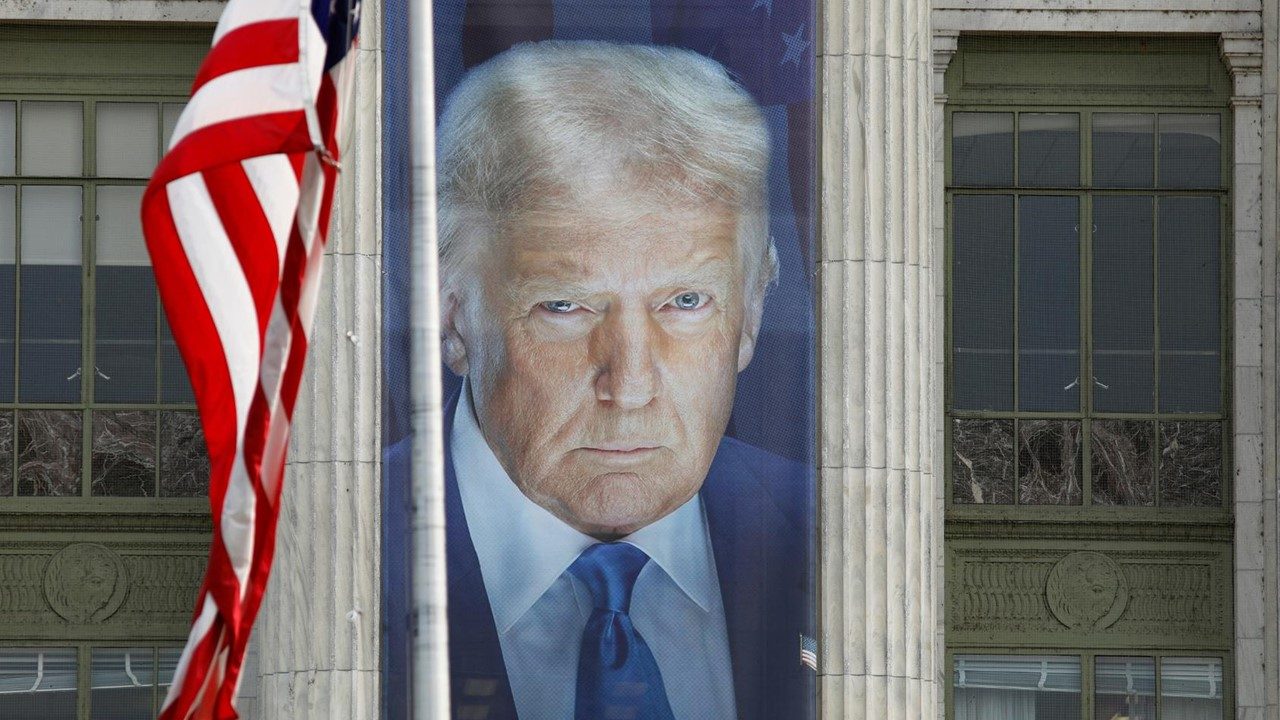
A high-stakes battle over the price of beef is unfolding across the U.S. cattle industry, with ranchers warning that President Trump’s plan to flood the market with up to 300,000 metric tons of additional foreign beef could undermine the very herd expansion needed to bring long-term stability to the beef supply.
Trump announced the 90-day import initiative Friday, August 21, arguing that the additional beef would help lower prices for American consumers. He said the imported product would be sold at prices as much as 25% below current market levels, providing immediate relief while U.S. cattle producers rebuild a national herd that has fallen to historically low levels.
But the announcement delivered a very different message to cattle producers.
Cattle futures plunged sharply following the announcement, hitting eight- to nine-month lows before recovering some ground. For ranchers and feeders preparing for the critical fall marketing season, the timing could hardly be more consequential.
Kent Bacus, executive director of government affairs for the National Cattlemen’s Beef Association (NCBA), said the plan risks disrupting a cattle market that is already sending producers important signals about rebuilding.
“By taking those safeguards off for 90 days, that’s really going to send a lot of negative signals to the cattle markets, something we’re very concerned about. And it’s not really going to move the needle that much on beef prices,” said Bacus.
A Short-Term Fix for a Long-Term Problem
The administration’s argument is straightforward: beef prices are too high, consumers are feeling the pressure and bringing in more foreign beef could provide immediate relief.
The cattle industry’s argument is more complicated.
America’s beef supply problem isn’t simply a shortage of beef sitting in grocery store coolers. The fundamental problem is a shortage of cattle.
Years of drought, high feed costs and elevated production expenses forced ranchers to liquidate cows and shrink their herds. Rebuilding those numbers takes years, not months.
A heifer retained today must reach breeding age, be successfully bred and produce a calf. That calf then must spend additional time growing before eventually becoming part of the nation’s beef supply.
That lengthy biological cycle is why cattle producers are increasingly concerned that a policy designed to lower beef prices over the next 90 days could weaken the economic incentive to rebuild the herd over the next several years.
Bacus said the administration’s promise of a 25% reduction in beef prices also raises significant questions.
“But there’s really no rules or really no details as to how they would carry that out. That’s truly unprecedented. And other than probably a handshake agreement, I don’t know how you can actually get the importers to do that. And I also don’t know how you would get the retailers to ultimately do that or whoever’s going to move this product. That would take a full supply chain agreement to do that,” according to Bacus.
That uncertainty extends throughout the beef industry.
Even if foreign beef enters the United States at a lower cost, there is no guarantee that the savings will be passed completely through importers, processors, distributors and retailers to consumers.
And without a mechanism to guarantee those savings, cattle producers question whether the potential damage to domestic cattle prices could outweigh the benefit at the grocery store.
The Market Reaction Comes at a Critical Time
The announcement came just as cattle producers were receiving another warning about the shrinking domestic supply.
USDA reported approximately 1.42 million cattle placed on feed during July, an 11% decline from a year earlier and the lowest July placement figure recorded since the current data series began in 1996.
That report underscored the fundamental challenge confronting the beef industry: there simply aren’t enough cattle entering the production system.
At the same time, producers are approaching the fall period when many ranchers must decide whether to retain heifers, expand breeding herds and invest in additional production.
Those decisions depend heavily on expectations for future cattle prices.
That’s why cattle organizations say market signals matter.
If producers believe additional imports could push domestic cattle prices substantially lower, they may have less incentive to retain breeding animals and rebuild.
“The concern is that, though, if the government continues to try to intervene in the marketplace, then instead of market forces driving that and seeing that reflected in consumer prices, then you start getting the government and manipulating these things,” said Bacus.
Consumers Are Still Buying Beef
There is another factor complicating the administration’s argument that imports are needed to force beef prices lower: demand remains remarkably strong.
Despite record or near-record retail prices, consumers continue purchasing beef.
Bacus said if consumers were unwilling to pay those prices, the market would already be responding.
“There are other proteins available. And if prices, if the market forces were really pushing back, then we would see that. We would see that reflected in the price. But consumers continue to pay that top dollar for that high-quality protein,” added Bacus.
That strong demand is one of the reasons cattle producers have been able to command historically high prices for a limited supply of animals.
But it also creates the central political dilemma confronting the Trump administration.
Consumers want lower grocery bills now.
Cattle producers need strong enough prices and market confidence to justify rebuilding a herd that could take years to fully recover.
Nearly 660 Million Pounds of Additional Beef
The proposed 300,000 metric tons equates to roughly 660 million pounds of beef.
On its face, that is a massive amount of product.
But cattle economists and market analysts have questioned whether that volume is large enough—or could enter the country quickly enough—to fundamentally change retail beef prices.
The United States imported approximately 4.4 billion pounds of beef in 2025. The proposed additional volume would represent roughly 15% of that annual import volume, if compared on that basis.
The question is whether foreign suppliers can move that much eligible beef into the U.S. market within a 90-day period and whether the resulting increase in supply would be large enough to materially alter retail prices.
The administration has not provided all the details.
Trump has not publicly identified the countries that would supply the additional beef, nor has the administration fully outlined which products would qualify or precisely how the promised consumer discount would be enforced.
Brazil is one potential supplier, while Australia, New Zealand and Uruguay are also major beef suppliers to the United States. Canada and Mexico already have significant tariff-free access under existing trade agreements.
The White House has indicated an executive order removing applicable tariffs is expected.
For cattle producers, however, the uncertainty itself is becoming part of the problem.
CLICK BELOW for Hoosier Ag Today’s radio news report: