
Silicon Valley has spent the last few years pitching artificial intelligence to aid with global agriculture—promising autonomous tractors, algorithmically perfected fertilizer scripts, and predictive crop analytics that can out-smart a changing climate.
But across the American Heartland, a stark reality check is setting in. For the people actually steering the tractors, the AI revolution looks less like a lifeline and more like a complicated, unproven expense during one of the tightest economic squeezes in a decade.
According to the June 2026 Purdue University-CME Group Ag Economy Barometer, a comprehensive monthly survey of 400 agricultural producers across the country, a staggering 52 percent of U.S. farmers say they currently see “no meaningful benefit” to utilizing artificial intelligence or data-driven tools on their operations.
The widespread skepticism arrives as overall farmer sentiment tumbled six points this month to an index of 113, driven down by stubborn inflation, plummeting crop prices, and a crippling input-cost environment. Forty-seven percent of producers listed high input costs as their primary concern, leaving little financial or psychological room for expensive technology experiments.
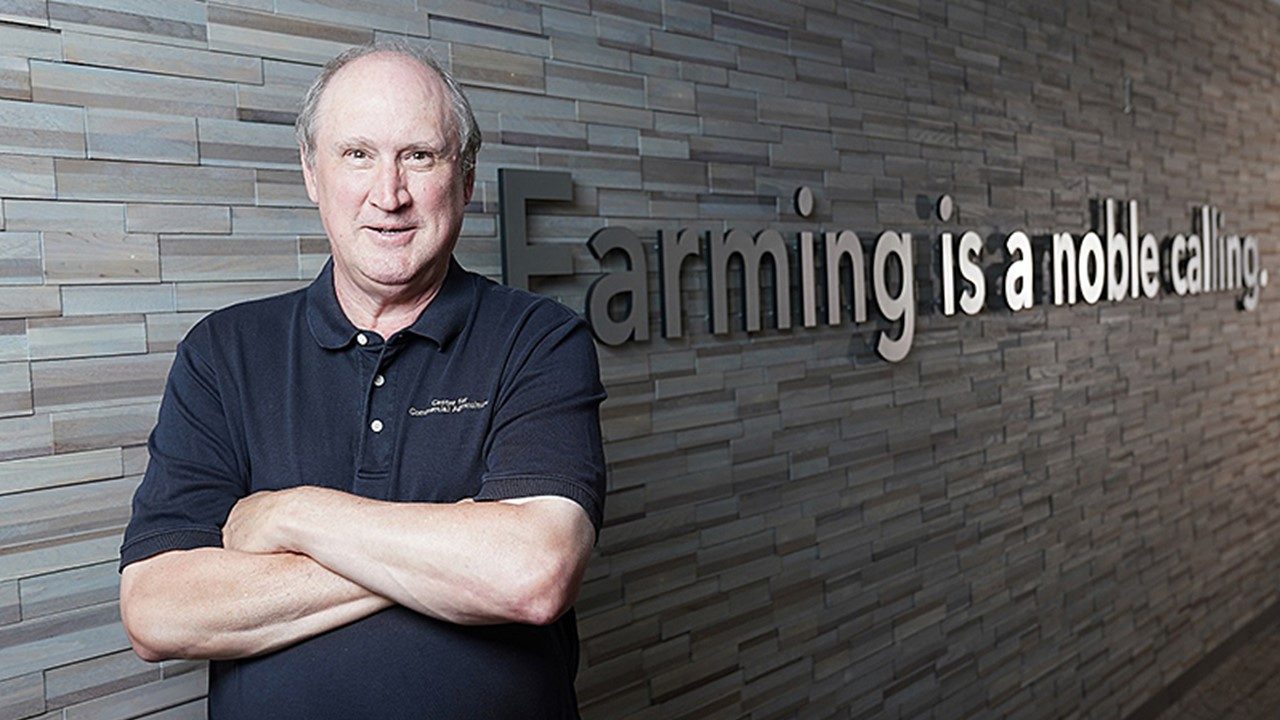
“I think what’s going on here is people know about artificial intelligence, but they’re not exactly sure how to use it,” said Dr. Michael Langemeier, Director of Purdue University’s Center for Commercial Agriculture and a co-author of the barometer. “Usually producers’ response to a tight margin environment is to try to increase production and maybe produce their way out of the problem.”
Yet, even among the tech-forward 23 percent of farmers who believe AI will increase their yields, a secondary hurdle looms: usability.
An overwhelming 85 percent of respondents indicated that the management recommendations generated by data-driven tools are either “sometimes” or “often” difficult to follow. The friction highlights a massive disconnect between software engineers designing idealized computer algorithms and the chaotic realities of dynamic, real-world fields.
“We live in a very uncertain environment, you know, driven by weather and other factors,” Langemeier noted. “It’s very difficult—it’s very difficult to follow through on a production plan, for example. And so I think that’s what’s going on.”
For a midwestern corn or soybean farmer, a perfectly calculated digital recommendation to apply fertilizer on a specific Tuesday falls completely apart if three inches of rain turns the field into an impassable marsh.
Furthermore, Langemeier points out that the ag-tech marketplace is suffering from extreme fragmentation. Modern farms generate mountains of data, but it is currently locked away in isolated corporate silos—a yield map on a John Deere monitor, a financial spreadsheet in an accounting suite, and an agronomic soil test from a local co-op.
“We’ve had a lot of different software that collects data and analyzes data for a specific part of your operation, and the real challenge has been putting the pieces together,” Langemeier explained. “These pieces usually aren’t put together.”
For AI to win over a deeply skeptical farming public, tech providers will have to stop selling individual gadgets and start building systems that can unify a farm’s entire ecosystem.
“In my mind, that’s what AI is going to do,” Langemeier said. “AI is a way to combine data from all those different tools and make a decision with all the data, rather than just pieces of the data. I think that’s the real power of the AI.”
Demographics also play an unheralded role in the tepid adoption rates. The average age of the American farmer hovers in the mid-50s, a cohort that has spent decades managing multi-million dollar businesses successfully on intuition, experience, and historical local knowledge. For a producer eyeing the twilight of their career, a heavy capital investment into artificial intelligence simply doesn’t compute.
“If you’re 65 and you’re going to farm till 70, and no one’s coming back to the business, are you going to invest a lot of time in technology, including AI? Probably not,” Langemeier observed, noting that adoption will likely depend on the next generation of younger, college-educated producers returning to family operations. “That’s the kind of person you’re going to see take this up.”
Until ag-tech firms can prove their software can tangibly lower per-acre input costs or sync seamlessly across different equipment brands, half of America’s fields will remain closed to the artificial intelligence boom. In a year defined by tight margins, the old-fashioned human calculus of cost-cutting will continue to beat out the most sophisticated algorithms Silicon Valley has to offer.
CLICK HERE to read the full results of the survey.
CLICK BELOW for Hoosier Ag Today’s radio news report: