
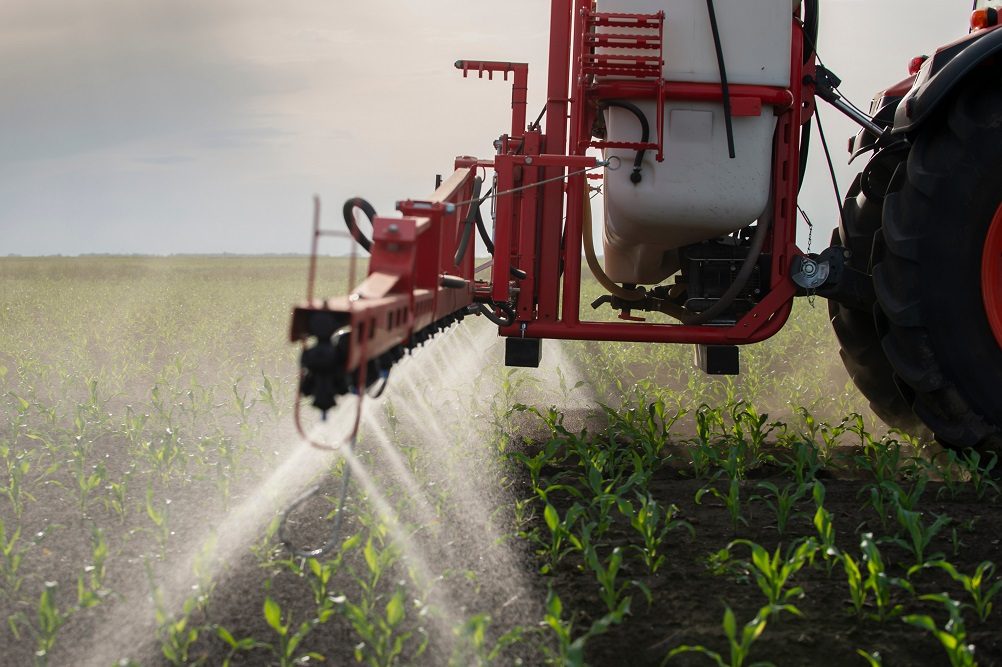
Just days after winning a landmark victory at the U.S. Supreme Court, Bayer AG is receiving a backlash from its primary customers: America’s farmers.
On Tuesday, Bayer’s subsidiary, the Monsanto Company, along with its affiliate Ruveon LLC, filed a major petition with the U.S. Department of Commerce and the International Trade Commission (ITC). The filing demands the imposition of aggressive anti-dumping and countervailing duties (AD/CVD) on imports of glyphosate—the active ingredient in Roundup and the most widely used weedkiller in global agriculture—originating from China.
Bayer, the sole domestic manufacturer of glyphosate, alleges that a surge of heavily subsidized Chinese imports has flooded the U.S. market at “less than fair value,” undercutting domestic manufacturing and squeezing corporate profits. The company is alleging dumping margins ranging from 68.90% to as high as 446.47%.
The sudden trade offensive has drawn swift, scalding condemnation from major agricultural trade groups representing corn, soybean, and wheat growers. For American farmers already reeling from an acute multi-year downturn marked by stubborn inflation, high interest rates, and plummeting commodity prices, the trade petition feels like a knife in the back.
“Agricultural companies like to position themselves as a partner to American farmers,” said Jed Bower, an Ohio farmer and president of the National Corn Growers Association (NCGA). “This is no act of partnership. They are taking this step purely for the benefit of the company and its shareholders, once again at the expense of the American farmer and at a time when the ag economy is facing one of its most difficult periods in decades.”
A Whiplash Turn in the Legal Arena
The timing of the trade petition has amplified the sense of betrayal sweeping across the Farm Belt.
Exactly five days prior, on June 25, the Supreme Court ruled 7–2 in Monsanto v. Durnell, handed down by Justice Brett Kavanaugh. The historic ruling established that federal environmental laws preempt state-level failure-to-warn lawsuits, effectively shielding Bayer from tens of thousands of current and future multi-million-dollar product liability claims linking glyphosate to cancer.
American farm groups, including the NCGA and the American Soybean Association (ASA), had spent years aggressively expending political and legal capital to protect Bayer’s crown-jewel product. Farm groups filed amicus briefs all the way to the high court and previously successfully sued to block California’s Proposition 65 cancer warning label on Roundup.
“The American corn grower has shown up repeatedly to defend access to important tools in our toolbox,” Bower said. “Unfortunately, we are being forced to defend our access to these tools again, but now we’re doing so thanks to the actions of companies we’ve previously partnered with. Disappointment doesn’t begin to cover how this news feels.”
The Economic Battleground: Free Trade vs. Protectionism
In its filing, Bayer paints the petition as a necessary defense mechanism against state-directed, anti-competitive market behavior by Beijing. According to the petition, Chinese manufacturers carried out a coordinated, subsidized campaign between 2023 and 2025 to scale up glyphosate exports into the U.S., causing domestic prices, sales, and profits to crater.
The legal mechanics of U.S. trade laws mean that the ITC focuses strictly on whether a domestic industry is suffering “material injury” due to foreign subsidies or dumping. The financial pain shifted downward onto U.S. consumers or businesses is explicitly excluded from the agency’s core statutory calculations.
However, economists and agronomists note that the impact on the ground will be immediate. Because the U.S. agriculture sector relies heavily on foreign inputs to manufacture generic weedkillers, imposing massive import taxes could instantly cause crop protection costs to soar. Market data indicates that nearly 99% of certain primary glyphosate technical ingredients used by independent U.S. formulators are sourced from China.
The table below highlights how recent protective trade actions petitioned by agricultural input suppliers have systematically driven up costs for domestic growers:
| Year | Petitioner Company | Input Subject to Tariffs | Economic Impact on U.S. Growers |
| 2021 | Mosaic Co. & J.R. Simplot | Phosphate Fertilizers | $6.9 Billion in added costs (2021–2025), yielding record-high retail prices. |
| 2024 | Corteva Agriscience | 2,4-D Herbicide | Inflated costs for chemical combinations despite inadequate domestic production capacity. |
| 2026 | Monsanto (Bayer) & Ruveon | Glyphosate Weedkiller | Pending. Farm groups project sudden cost spikes and restricted generic competition. |
“What we are seeing is an increasing trend of companies abusing trade remedy laws to box out competition and corner more of the U.S. market, at great expense to their customers,” Bower noted.
A Volatile Political Flashpoint
The corporate battle lands squarely in the middle of a highly volatile trade environment in Washington. Just 24 hours before Bayer submitted its petition, President Trump signed an executive order suspending the highly controversial countervailing duties on Moroccan and Russian phosphate fertilizers for eight months, responding to immense pressure from agricultural lobbies.
The American Soybean Association, which cheered the administration’s temporary fertilizer relief, warned that Bayer’s petition threatens to undo fragile economic stabilization.
“At a time when producers continue to face tight margins and significant economic uncertainty exacerbated by rising costs, it is imperative that farmers have access to an affordable, reliable, and competitive supply of inputs,” the ASA said in a statement. “Actions to impose import taxes on those products limits market competition, threatens cost spikes, and ultimately hurts U.S. farmers.”
The U.S. Department of Commerce is expected to formally decide whether to initiate its investigations by July 20, 2026, with the International Trade Commission slated to deliver its preliminary injury determination by mid-August. If the corporate petition succeeds, American farmers face the grim prospect of paying substantially more to protect their fields from weeds, even as the global prices for the crops they harvest continue to drop.

