
More than six years after the last major Farm Bill became law, pressure is mounting on the Senate to deliver what farm-state lawmakers describe as urgently needed financial relief for an agricultural economy battered by falling commodity prices, high input costs and growing uncertainty across rural America.
The House recently advanced a new Farm Bill package, shifting attention to the Senate, where lawmakers now face the difficult task of assembling the bipartisan coalition needed to move one of Congress’s most consequential pieces of legislation for farmers, ranchers and rural communities.
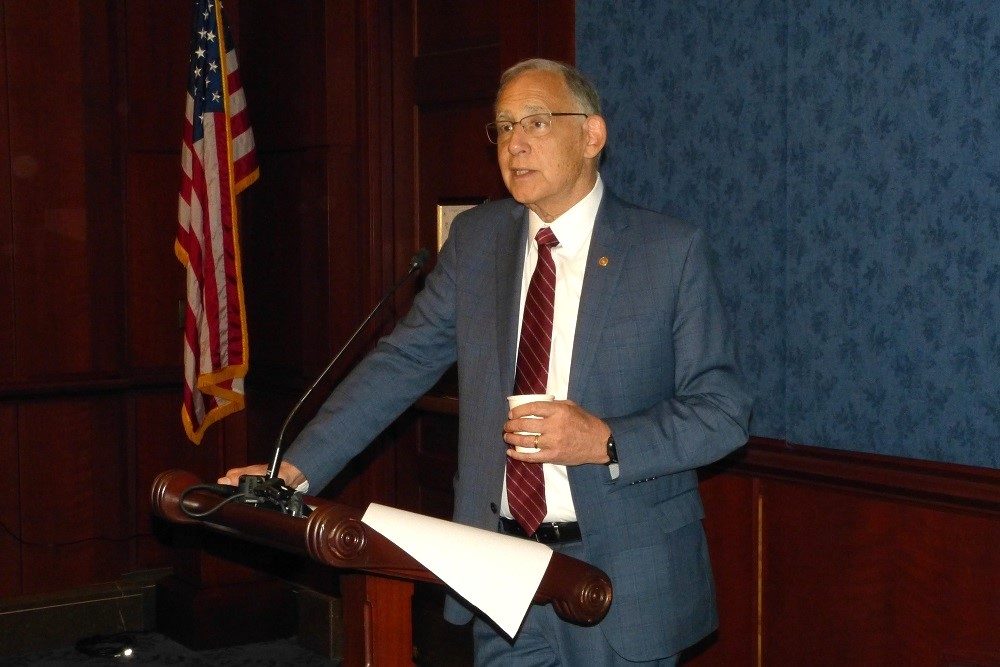
During a recent interview in Washington, Hoosier Ag Today asked Senate Agriculture Committee Chairman John Boozman what message he had for farmers who feel they’ve been let down by lawmakers in Congress who have been unable to pass a new Farm Bill since 2018.
Boozman responded by defending Congress’s record on agricultural policy, pointing to provisions already enacted through the One Big Beautiful Bill Act, which President Trump signed into law on July 4, 2025. The legislation included tens of billions of dollars in agricultural spending and incorporated several priorities that lawmakers had originally hoped to include in a standalone farm bill.
“Well, the message I would have is that, in reconciliation, the One Big Beautiful Bill [Act], we increased Farm Bill spending—some of it for seven years—to the tune of $68 billion,” Boozman said. “It’s the biggest investment in history regarding an increase in a Farm Bill. And [producers are] going to see that in October. That’s when it’ll pay out, you know, because it will from the last crop.”
The Arkansas Republican argued that many of the farm sector’s top priorities have already been addressed through the 2025 reconciliation package, which expanded commodity support programs, increased crop insurance and risk-management funding, boosted conservation spending and strengthened agricultural research initiatives. The law also raised statutory reference prices for major commodities including corn, soybeans and wheat, expanded payment limits for producers, created new base-acre opportunities and extended dairy support programs through 2031.
Boozman said those provisions reflected years of feedback from farmers across the country.
“On the research side, [we] doubled that. [Also, we got a] $50 billion increase in the risk management tools, and a tremendous increase in conservation,” he said. “These are the things I spent two years running around America asking producers what they wanted. That’s what they wanted. So, we’ve gotten that for them. Like I say, we need to finish this [Farm Bill] up, and we will get it finished up.”
The broader legislation signed by Trump also included tax incentives tied to agricultural and rural lending, expanded investment incentives for rural development zones and new tax treatment for certain farmland sales to qualified farmers. Supporters of the law said the changes were intended to improve access to capital in rural communities and strengthen long-term farm viability at a time when many producers are struggling with tight margins and elevated borrowing costs.
Still, the Senate faces steep political hurdles. Unlike the House, where Republicans can often move legislation with a narrow majority, Senate leaders will likely need at least nine Democratic votes to overcome procedural barriers and advance a final package.
“So, we have the opportunity to lose some Republicans—a few, and we have the opportunity to lose a bunch of Democrats. We’ve got to get probably nine, ten, or more to vote with us. So, what I’d like to do is take the things that we feel like there’s support on both sides, maximize our time building a coalition with those things, and then get them passed,” Boozman said.
The urgency surrounding the legislation reflects growing financial pressure in farm country. Producers have faced multiple years of declining crop prices while contending with persistently high costs for fertilizer, seed, fuel, machinery and land. Agricultural economists and farm organizations have increasingly warned that many operations, particularly smaller and mid-sized family farms, are under severe financial stress.
Boozman said Congress should also consider additional direct assistance to producers while lawmakers continue negotiations on the broader farm bill.
“And I’d like to see us provide $15, $17 billion at least, in a bridge payment,” he said.
For many farmers, the debate in Washington is no longer simply about updating federal policy. It has become a test of whether Congress can provide a stronger financial safety net for an agricultural sector confronting some of the most difficult economic conditions it has faced in years. While key portions of farm policy were folded into last year’s reconciliation package, lawmakers from both parties continue to acknowledge that completing a full Farm Bill remains essential to providing long-term certainty for America’s farmers, ranchers and rural communities.
CLICK BELOW for Hoosier Ag Today’s radio news report:


