An international group led by Purdue University has recently been awarded a $400,000 grant from The National Science Foundation to further development of an artificial intelligence-based technology designed to improve early disease detection in apple orchards.
The funding is part of $2.4 million being awarded through the NSF’s Advancing Innovations for Empowering NextGen AGriculturE, or AI-ENGAGE, initiative.
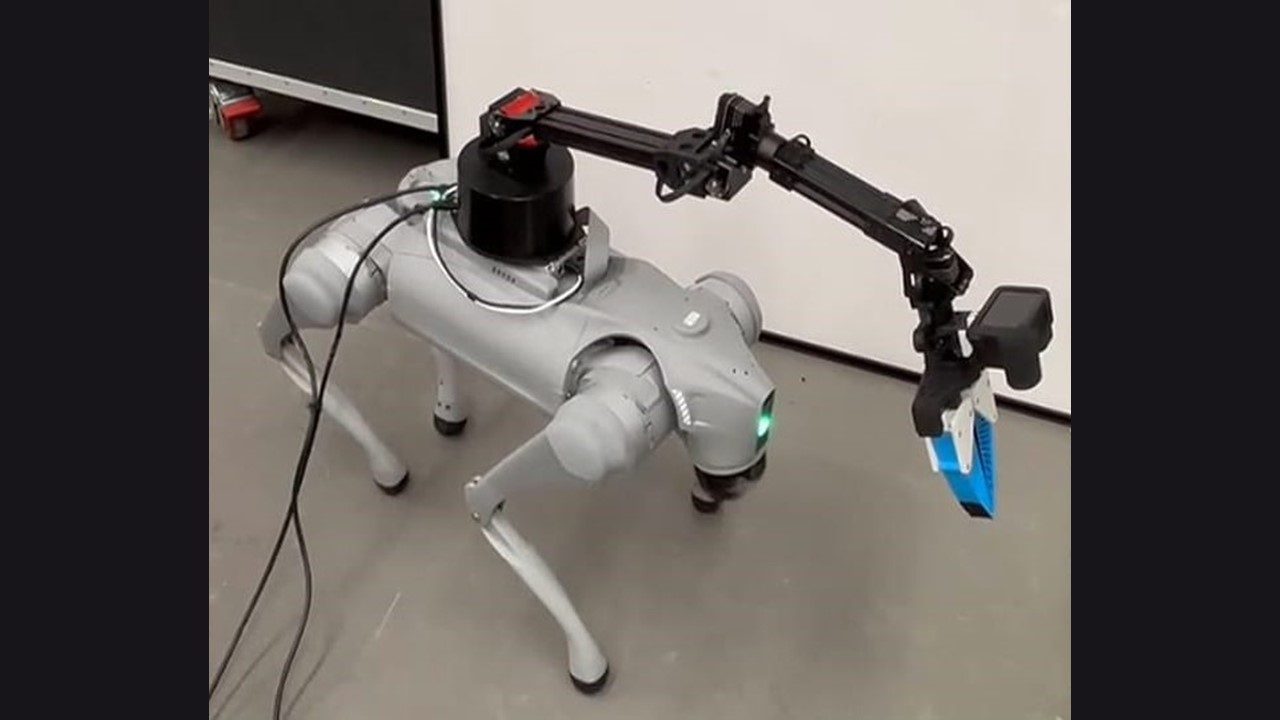
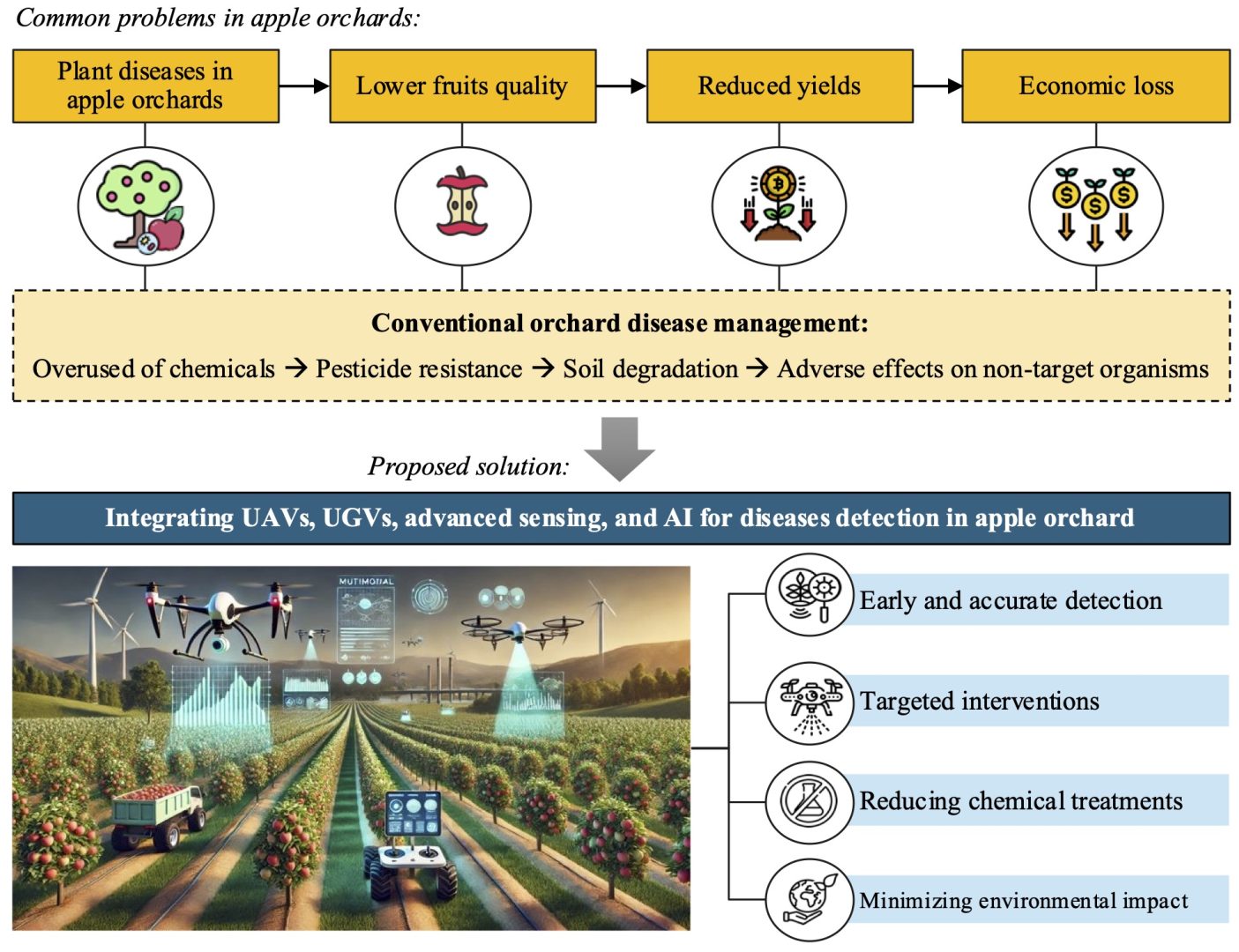
The Purdue-led group, which also includes researchers in India, Japan and Australia, are developing autonomous aerial and ground robots that can detect disease and apply targeted treatment as needed.
Yu She, assistant professor of industrial engineering at Purdue, is leading the project. He tells Inside INdiana Business that the project aims to detect and treat disease in two ways.
“First, we will have drones. They will fly from above so they can do very early detection of disease. It’s very fast, but it’s kind of a rough estimation,” he said. “Next step, we’re going to send these ground robots to get close to the canopy of these apple trees, and they can do precise confirmation if there’s really disease or not.”
If disease is confirmed, the ground robots can then begin precise spot spraying of chemicals to help treat the disease. She said that process would help farmers avoid unnecessarily spraying chemicals broadly over the entire orchard, which would in turn save the farmers money by not having to buy so many chemicals.
“We also get less chemicals in the soil, and it’s more sustainable for the orchard as well,” he said.
The effort is similar to a previous project that he led, where his team developed autonomous robots that can be used for strawberry harvesting. He said the new project that received NSF funding creates an opportunity for synergy with the strawberry harvesting project.
“This new project will bring some new capability,” he said. “For example, with the drones from above, you can do a very fast estimation for disease detection for the whole orchard. So that adds some additional complementary resource to my group.”
He also noted that the collaboration among multiple countries provides research benefits that he didn’t have with his previous project.
“We have collaborators from India, Japan, and Australia, so those are some resources I don’t have from previous research,” he said. “I do believe this is very important, because we will test our data set, our algorithm, across different environments, different orchards from different countries. [It will] make this technology more robust.”
He said the research group will spend the next one to two years developing and testing the technology in the lab before deploying it into apple orchards for field research.
 Graphic provided by Purdue University.
The NSF also awarded grants to AI-based agriculture technology projects being developed at Iowa State University, Kansas State University, Washington State University, Cornell University, and a collaboration between the Missouri University of Science and Technology and the University of Tennessee.
“By integrating current and emerging technologies, like AI, into agriculture, we are advancing scientific frontiers to provide U.S. farmers and their international counterparts with tools they need to increase crop yields, more effectively manage pests, strengthen agricultural resilience and ensure a more secure food supply,” Brian Stone, performing the duties of NSF director, said in written remarks.
You can learn more about the AI-ENGAGE initiative by clicking here.
Source: Inside INdiana Business